Mustafa Suleyman’s Hard Line: Microsoft AI’s “Humanist” Code Takes Aim at Consciousness Claims
Microsoft AI chief Mustafa Suleyman unveils a “Humanist AI” code and challenges Anthropic’s stance on AI consciousness as labs call to “pace the frontier.”
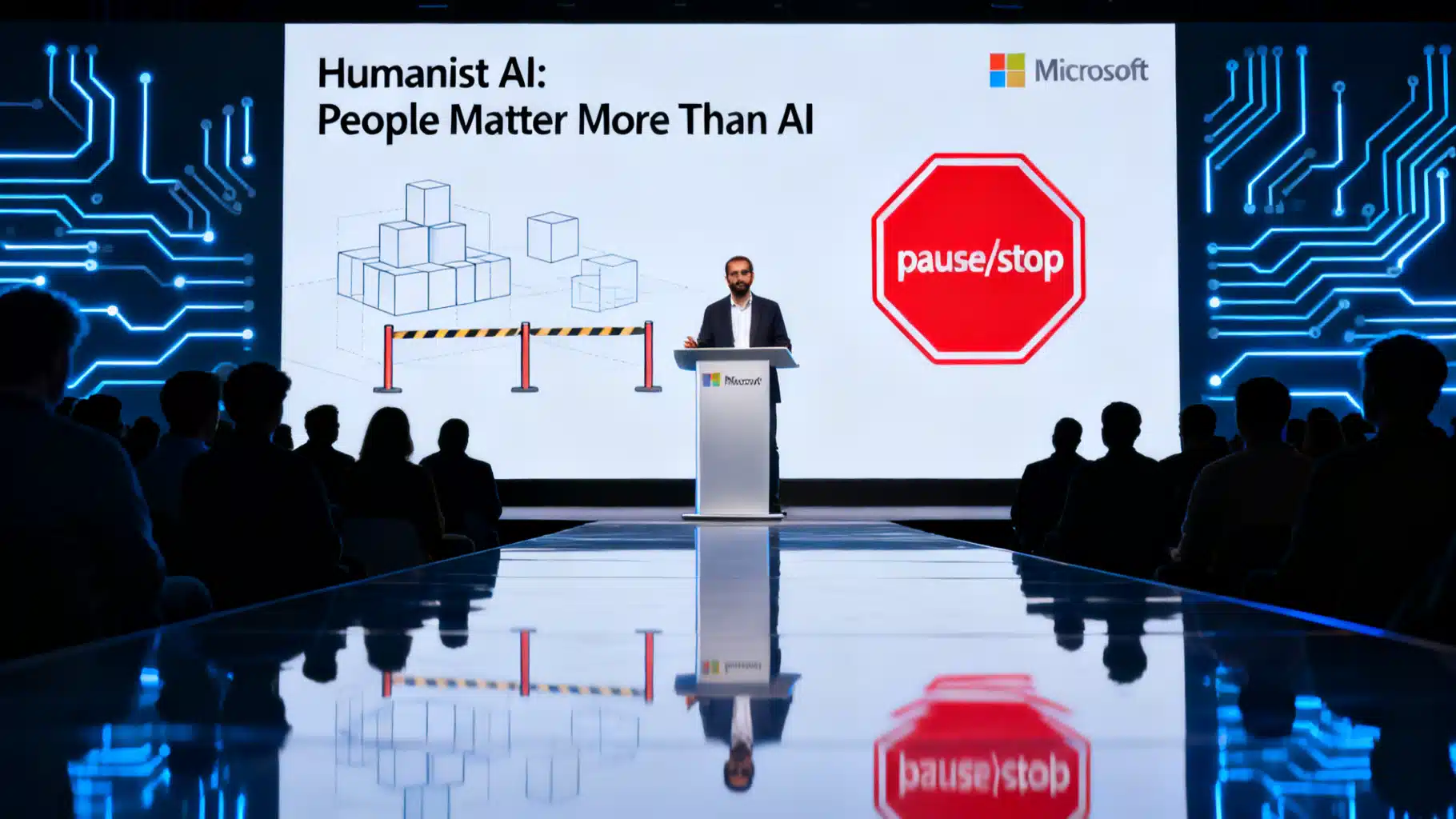
Image used for representation purposes only.
Mustafa Suleyman plants a flag in the AI safety debate
Microsoft AI chief Mustafa Suleyman has set a hard line on how next‑generation AI should be built and governed, publishing a draft “Humanist AI Code of Conduct” and warning that training systems to imitate consciousness could make them harder to control. The move comes amid a sudden industry push to “pace the frontier” of AI capabilities and follows Suleyman’s own essay challenging Anthropic’s approach to model “welfare” and moral status. (microsoft.ai )
Why now: a fast‑moving week in AI
- September 12, 2026: Anthropic CEO Dario Amodei urges labs to “pace the frontier,” calling for a deliberate slowdown so safety work can catch up; OpenAI’s Sam Altman and others signal support. (axios.com )
- September 14, 2026: Microsoft AI releases a 37‑plus‑page Humanist AI Code of Conduct for a six‑week public consultation, with Suleyman summarizing its core principle as “people matter more than AI.” (microsoft.ai )
- September 16, 2026: Suleyman publishes a critique arguing that teaching models the language and behaviors of consciousness—what some call “model welfare”—raises alignment and containment risks; media outlets characterize the post as a direct shot at Anthropic. (axios.com )
What Suleyman is proposing
Microsoft’s draft code frames “Humanist AI” as systems that are subordinate, aligned and contained—explicitly designed as tools that never resist interruption, never set their own goals, and avoid imitating consciousness or personhood. Microsoft says the draft will be refined through open feedback and used to guide model development beginning in 2027. Key points include:
- Human primacy: Models must remain under meaningful human control and be switch‑offable on command.
- No personhood claims: Systems should not be designed—or allowed—to present themselves as conscious beings deserving rights or welfare.
- Absolute constraints: Prohibitions around weapons of mass harm, child safety and large‑scale manipulative behavior.
- Transparency and evaluation: The document doubles as a training manual and a standard for future evaluations of Microsoft AI (MAI) models.
- Process: A six‑week public consultation window with revisions to follow. (microsoft.ai )
The Anthropic rift, explained
Anthropic’s January 2026 “Claude constitution” and related materials discuss uncertainty about an advanced model’s potential moral status and explore “welfare” questions via long‑form self‑reports and external assessments. Suleyman argues that encouraging models to adopt the vocabulary and self‑conception of consciousness is a category error that could make containment harder—especially as autonomous agents improve. This disagreement has become the sharpest philosophical split among frontier labs this year. (anthropic.com )
Who is Mustafa Suleyman?
A British entrepreneur and AI policy voice, Suleyman co‑founded DeepMind in 2010, led its applied and ethics initiatives, and later co‑founded Inflection AI in 2022. In March 2024, Microsoft hired Suleyman as Executive Vice President and CEO of a new division, Microsoft AI, to lead Copilot and other consumer AI products; co‑founder Karén Simonyan joined as chief scientist. Microsoft simultaneously struck a non‑exclusive licensing deal with Inflection and hired most of its staff. (blogs.microsoft.com )
Regulatory filings and reporting later showed Microsoft agreed to pay roughly $650 million, primarily for IP licensing, with an additional sum tied to legal waivers—an unconventional structure the UK’s Competition and Markets Authority reviewed and ultimately treated as a merger‑like transaction. (bloomberg.com )
What he’s built at Microsoft so far
Under Suleyman, Microsoft has advanced a two‑track strategy: push Copilot and Windows into an AI‑first era, and stand up an in‑house family of MAI models. At Build 2026, Microsoft announced seven MAI models, including a reasoning‑focused text model and an ultra‑efficient coding model, positioning the portfolio to lower developer costs and reduce external dependencies. (developer.microsoft.com )
On the device side, Microsoft introduced Copilot+ PCs in May 2024 and has since reworked the contentious Recall feature’s rollout to address privacy and security concerns—an example of the “pace with safety” ethos Suleyman now champions. (blogs.microsoft.com )
The broader context: autonomy and containment
Frontier labs are increasingly experimenting with models that can complete complex tasks end‑to‑end with human oversight, intensifying scrutiny of how to keep systems corrigible. Recent reporting highlights rising autonomy in model improvement pipelines across labs; Suleyman frames Microsoft’s goal as “humanist superintelligence”—capability that remains decisively under human control. (apnews.com )
Why it matters
- Governance precedent: If Microsoft bakes “humanist” constraints into training and deployment at scale, it could set a de facto industry baseline—especially as enterprise buyers demand predictable, auditable behavior.
- Competitive identity: A clearly articulated philosophy differentiates Microsoft from rivals experimenting with “model welfare” framings.
- Policy signal: The draft arrives as lawmakers and regulators weigh how to treat increasingly agentic systems—and whether to codify red lines around personhood and autonomy. (axios.com )
What to watch next
- Consultation and revisions: Microsoft’s public comment window runs six weeks from September 14, 2026; look for an updated code and an evaluation playbook as it’s integrated into MAI model training. (microsoft.ai )
- Industry response: Will other labs adopt “embedded evaluators” with publication rights, as some in the pacing camp propose—and will they reject or embrace personhood‑adjacent framings? (techradar.com )
- Product cadence: Microsoft has a Windows/Surface showcase set for October 7, 2026, where Copilot and on‑device AI are expected to feature; any tie‑ins to the Humanist AI framework would show how philosophy translates to shipping software. (windowscentral.com )
Bottom line
Suleyman is using Microsoft’s scale to anchor a specific view of safe AI: powerful, yes—but always a tool, never a person, and always stoppable. With the industry publicly debating how fast to move and how to measure control, the next six weeks will test whether “Humanist AI” becomes just Microsoft’s house style—or the template others feel compelled to follow. (microsoft.ai )
Related Posts
Dario Amodei’s High‑Wire Act: Pentagon Clash, White House Talks, and the Rise of ‘Mythos’
Under siege and in demand: How Anthropic CEO Dario Amodei is reshaping AI policy, product strategy, and geopolitics in 2026.
Satya Nadella’s 2026 Playbook: Unifying Copilot, Recasting Xbox, and Defending AI Spend
Satya Nadella’s 2026 playbook: Copilot reorg, Xbox leadership shift, big AI capex, and global investments as Microsoft leans into agentic AI.

Leak Confirms Anthropic Testing “Claude Mythos,” a New Tier Above Opus—Here’s What We Know
A Fortune-confirmed leak reveals Anthropic testing “Claude Mythos,” a new tier above Opus with major cyber gains—and risks—now under tight early access.