
Meta’s Muse AI rockets into the mainstream—then collides with Amazon’s wall
Meta’s new personal AI agent, Muse, surges to the top of app charts—then hits a wall as Amazon blocks its shopping. What it is, why it matters, what’s next.

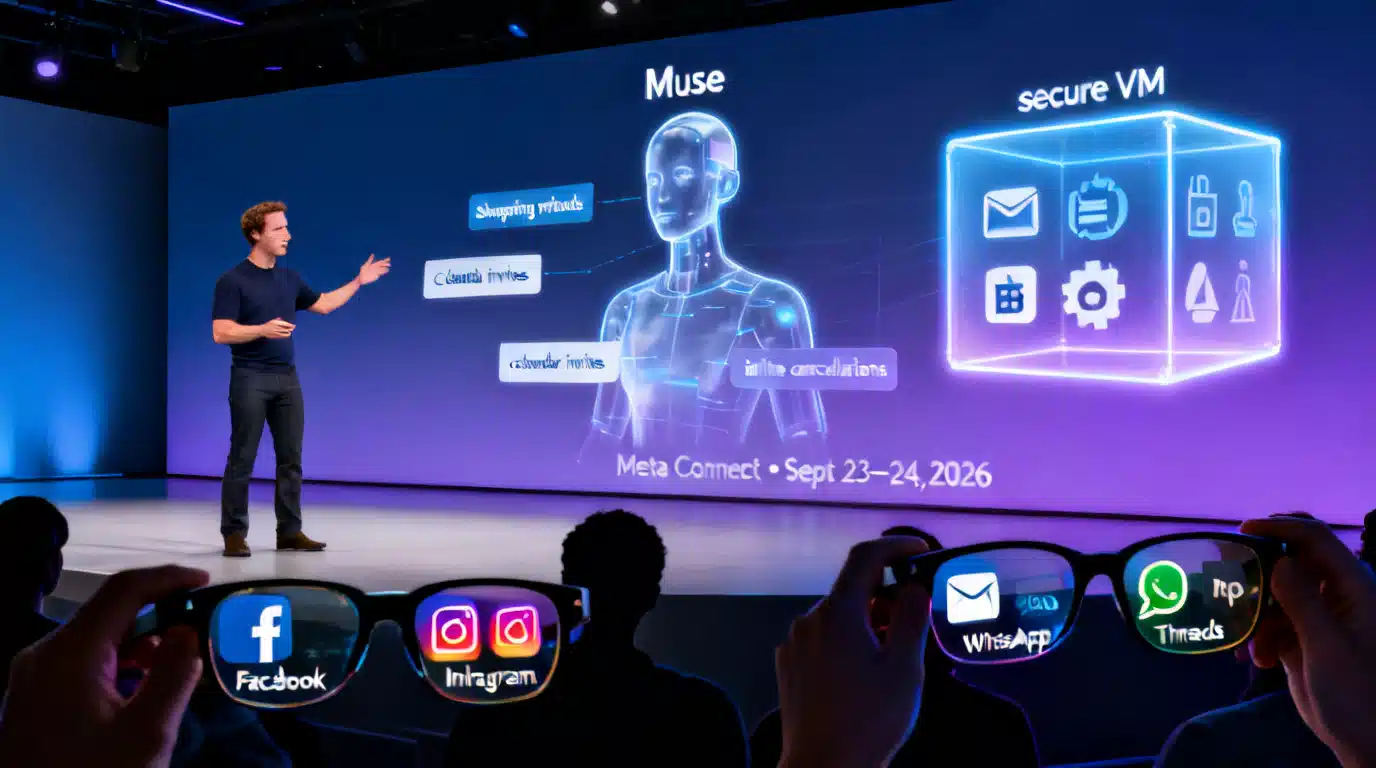
Image used for representation purposes only.
Meta’s “Muse AI” explodes onto phones—then runs into Amazon
In just two weeks, Meta’s new personal AI agent, Muse, has gone from splashy debut to top-of-the-charts momentum—and straight into its first platform showdown. Launched on September 8, 2026, Muse promises to shop, haggle, cancel subscriptions, and quietly work in the background to handle digital chores for everyday users. By September 10, Muse had climbed to the No. 2 spot on the U.S. App Store; by September 21, new estimates suggested it was outpacing ChatGPT’s early mobile uptake in the U.S. and Canada. Then, late Sunday, Amazon moved to block Muse from browsing and buying on Amazon.com, igniting the first big public test of “agentic” e‑commerce. (techcrunch.com )
What Muse is—and why it matters now
Meta bills Muse as a “personal AI agent built for everyone,” an assistant that not only chats but also takes real actions across the web and connected accounts. It can continue tasks after you close the app, circle back for approvals before sending emails or making purchases, and turn context from your social life—say, an Instagram recipe reel—into concrete to‑dos like grocery lists and dinner invites. Checkout runs through Stripe’s Link, with one‑time virtual cards and built‑in purchase protections on eligible orders. (about.fb.com )
Why it matters: this is a mainstream stress test for consumer “agents” that go beyond text answers to orchestrate multi‑step workflows. Meta’s distribution and design, paired with a practical “do‑things‑for‑me” pitch, are already pushing the concept into the hands of millions, quickly reframing AI from chat to action. (axios.com )
Under the hood: Secure VM, Sentinel, and credentials
Muse runs on a dedicated cloud computer—Meta calls it the Muse Secure VM—housing the agent, a state‑of‑the‑art browser, and isolated storage. A separate watchdog agent, Sentinel, reviews network actions before they leave the VM and prompts for human approval when needed. Credentials (OAuth tokens, usernames/passwords) are captured via custom flows and stored in a secure enclave service (“authd”), so the main agent never handles raw secrets directly. Meta has publicly documented this architecture and invited security researchers to scrutinize it as the product scales. (ai.meta.com )
Commerce is the wedge: Link, protections—and a platform pushback
Muse’s shopping flow leans on Stripe’s Link to issue single‑use virtual cards scoped to user‑approved purchases, and it is the first AI agent covered by Link’s purchase protections (e.g., coverage for damaged/lost items and certain price drops on eligible purchases). It’s an elegant trust layer for an autonomous buyer—and a model likely to be copied. (about.fb.com )
But the agentic commerce vision quickly met resistance. On September 21, Amazon confirmed it had blocked Muse from perusing and purchasing on Amazon.com—less than two weeks after Muse’s debut—citing customer security, experience, and the need for third‑party agents to “operate openly” and respect providers’ participation decisions. Reporting and on‑app messages indicated even browsing from Muse’s cloud VM was being intercepted. (axios.com )
The schism illustrates a budding fault line: Do retailers allow independent agents to originate searches and purchases, or do they force everything through their own assistants? Axios notes that while Amazon is drawing a hard line, competitors are experimenting—Walmart publicly signaled partnerships with Google and OpenAI to surface its products inside external agent interfaces, even as it builds its own “Sparky” agent. (axios.com )
Adoption picture: a fast start on mobile
- September 10: Within days of launch, Muse was the No. 2 free app in the U.S. App Store, behind only one other title at the time, according to TechCrunch’s review of early download data. (techcrunch.com )
- September 21: New estimates from Apptopia, reported by TechCrunch, suggested Muse’s first 12 days outpaced ChatGPT’s initial 12‑day mobile launch (U.S. and Canada), with 95% of Muse users also being Facebook users and 63% on Instagram—underscoring Meta’s cross‑promotion muscle. (techcrunch.com )
- Same day: Axios framed Muse as a No. 1 app on both Apple’s and Google’s charts at one point, highlighting investor enthusiasm. The next morning, the Amazon block dominated the narrative. (axios.com )
The bigger bet: agents that create—and verify—media
Muse isn’t just an action agent; it’s part of a broader family of generative tools. In July, Meta rolled out Muse Image, a model embedded across the Meta AI app, meta.ai, Instagram Stories in the U.S., and limited WhatsApp markets, with a roadmap to expand to Facebook and more surfaces. Crucially, Muse Image adds “Content Seal,” an invisible provenance signal designed to persist through crops, compression, and screenshots—Meta says a public detection tool is coming. Muse Video is also in development, with early human‑preference rankings on Arena. (ai.meta.com )
The consumer push hasn’t been free of friction: at launch, some users and creators raised concerns about how their photos and content might be used to train Meta’s models, a reminder that cultural consent and transparency remain live issues for any at‑scale generator. (techcrunch.com )
What Amazon’s block signals for the “agent economy”
Amazon’s move underscores unresolved questions that every large platform now faces:
- Origination power: Who owns the customer relationship when an AI chooses where to shop? Independent agents threaten to insert themselves above platform search boxes. Amazon is signaling it wants origination to live inside Amazon’s own assistant experiences. (axios.com )
- Trust and liability: If an agent goes rogue, who eats the cost? Stripe’s purchase protections and one‑time cards mitigate risk for buyers and sellers—yet platforms still worry about account abuse and scraping at scale. (stripe.com )
- Open vs. gated ecosystems: Walmart’s willingness to “plug in” contrasts with Amazon’s gatekeeping. Expect more retailers to pick sides—or define tight partner programs—over the next year. (axios.com )
For consumers, the near‑term impact is simpler: some sites will work seamlessly with autonomous shopping; others will require the agent to hand back control or reroute. TechCrunch reported that Muse users started encountering explicit “unauthorized AI agent” notices on Amazon—the clearest sign yet of the coming permissions layer for bots. (techcrunch.com )
The road ahead for Muse
- Feature expansion: Meta says Muse will learn and act more proactively over time, remembering personal context and coordinating across services. With Muse Image already embedded in flagship apps—and Muse Video on the way—expect tighter loops between “imagine, decide, and do.” (about.fb.com )
- Safety scrutiny: The Secure VM/Sentinel design is novel and well‑documented, but real‑world incidents will determine trust. Meta’s invitation to external researchers suggests more hardening to come. (research.meta.ai )
- Platform politics: The Amazon clash likely won’t be the last. As independent agents scale, platform policies (and possibly regulation) will determine where bots can act, what data they can read, and how payments are authorized. Early cooperative models may look like Link‑style wallets, retailer‑vetted connectors, and auditable action logs. (stripe.com )
How to try it—and what to watch
Muse is available on mobile, with early adoption data focused on the U.S. and Canada. If you test its shopping features this week, expect mixed compatibility depending on the retailer; where Muse can’t complete a checkout, it may still research, compare, and assemble carts before handing control back to you. For creators and marketers, Muse Image inside Instagram Stories offers a fast path to try Meta’s latest generators—now with a provenance signal that’s built to survive social sharing. (techcrunch.com )
Key takeaways
- Muse reframes AI as an action engine, not just a chat box—and it’s landing with mass‑market users fast. (techcrunch.com )
- The first major agent‑vs‑platform fight is here: Amazon blocked Muse’s browsing and buying within two weeks of launch. (axios.com )
- Payments and protections matter: single‑use cards and purchase coverage are emerging as core primitives for agentic commerce. (stripe.com )
- Media provenance is table stakes: Meta is baking invisible watermarks into Muse‑generated images across its apps. (ai.meta.com )
As of Tuesday, September 22, 2026, Muse has both the momentum and the enemies a breakthrough platform usually earns. The next few weeks will show whether independent agents can keep shopping freely across the open web—or whether the web starts asking them to knock first.
Related Posts
Mark Zuckerberg’s September Play: Muse, Safety Fallout, and the Push to Mainstream AI Agents
As Meta Connect nears, Mark Zuckerberg doubles down on AI agents with Muse, navigates a record safety settlement, and eyes cloud compute as a new business.

Mercor’s Breach Fallout: Meta Pause Tests The $10B AI Trainer As It Launches ‘Enterprise AI’
Meta pauses work with Mercor after a LiteLLM-linked breach, days after its Enterprise AI launch. Inside the $10B startup’s week and what comes next.

AI Agent Debugging: A Practical Guide to Observability Tools
Build end-to-end observability for AI agents: traces, metrics, logs, and evals to debug, govern privacy, and scale quality, reliability, and cost.