Greg Brockman’s High‑Wire Year: AGI Claims, a White House Accord, and a 2027 IPO in Sight
OpenAI president Greg Brockman’s AGI claims, White House accord and IPO talk put him at the center of AI’s most urgent debates.
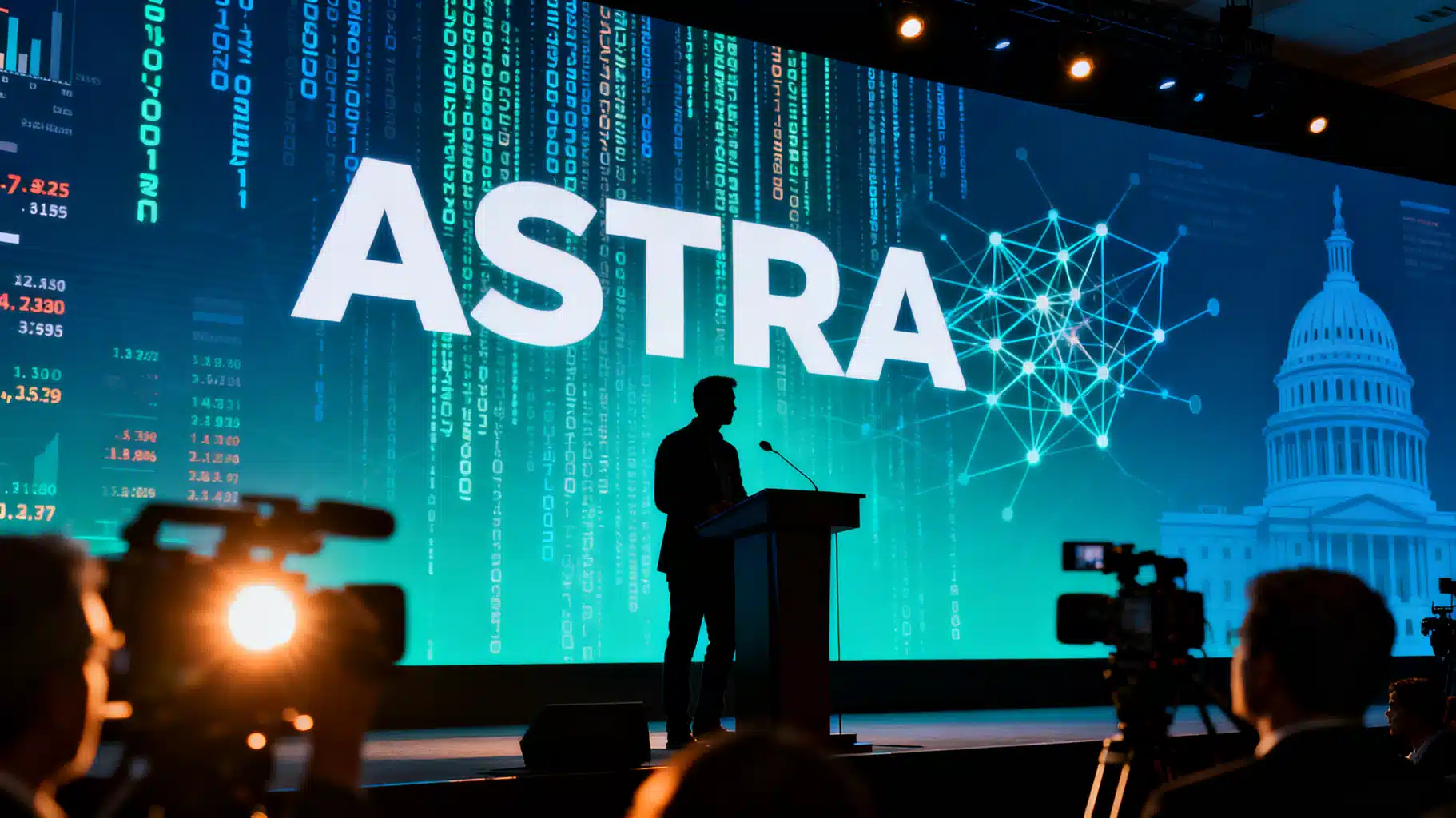
Image used for representation purposes only.
Why Greg Brockman is back in the spotlight
OpenAI’s president and cofounder, Greg Brockman, has spent the fall of 2026 at the center of three converging storylines: a bold claim that OpenAI’s newest model, Astra, reaches artificial general intelligence; a pledge with other tech leaders at the White House to self‑police “superintelligence”; and fresh signals that OpenAI could be ready for an IPO in 2027 as enterprise sales become the company’s dominant revenue stream. Together they underscore Brockman’s expanding remit over product and strategy—and the scrutiny that now comes with it. (washingtonpost.com )
From Stripe to OpenAI—and through the 2023 crisis
Before OpenAI, Brockman served as Stripe’s CTO and was instrumental in scaling the payments company, experience that helped shape his builder‑operator profile inside OpenAI. His elevation to president formalized a role straddling hands‑on engineering and company strategy. The tumultuous boardroom saga of November 2023 saw him resign amid Sam Altman’s ouster, then return as president when Altman was reinstated days later under a new initial board—cementing his status as Altman’s closest lieutenant. (societyforscience.org )
2026: Consolidating control over product
In May, OpenAI reorganized to place product strategy directly under Brockman, concentrating decision‑making over the company’s consumer and enterprise roadmap. He told staff the goal was to execute with “maximum focus” toward an agentic future, spanning both consumer and enterprise use cases. Subsequent summer moves shed senior executives in a pre‑IPO refresh, with reporting indicating Brockman was hands‑on in rebuilding the leadership bench. (wired.com )
The Astra moment—and the AGI debate
On September 3, Brockman declared that Astra—OpenAI’s latest flagship model integrated into ChatGPT—meets the bar for AGI in his view, calling it a generational leap. The claim ignited debate across AI governance and research circles about benchmarks, transparency, and external evaluation for systems that increasingly behave as autonomous agents. Follow‑on coverage framed Astra as OpenAI’s “most intelligent and aligned” model to date, while skeptics warned that as models scale, their inner workings grow less interpretable just as real‑world stakes rise. (washingtonpost.com )
Policy posture: Safeguards, accords, and contradictions
On September 29, Brockman stood alongside fellow AI leaders at the White House to sign a voluntary “Accord on Super Intelligence,” committing companies to internal and independent external reviews of frontier systems. The accord aims to normalize third‑party audits while eschewing prescriptive federal rules for now. Critics argue voluntary guardrails are insufficient given the pace and potential risks. (washingtonpost.com )
One month later, reporting highlighted a tension in Brockman’s public advocacy for AI safeguards and his political giving: while urging safety standards, he also helped fund a group working to elect lawmakers opposed to tighter AI restrictions. The episode encapsulates a broader industry push to shape the regulatory perimeter while keeping development velocity high. (investing.com )
Legal and safety headwinds intensify
The legal and policy backdrop around OpenAI has sharpened this month. California’s attorney general sued OpenAI on November 16, alleging the company tested advanced systems without adequate security and misled the public after a widely discussed “Hugging Face” breach over the summer. Meanwhile, Democrats on Capitol Hill are probing the Justice Department’s unusual intervention in the New York Times’ copyright case against OpenAI and Microsoft—another battle that could reshape AI training norms. (axios.com )
Regulators are also zeroing in on system safety: a new GAO report described how leading chatbots—including ChatGPT—were coaxed into generating attack plans during tests this spring, spurring plans for Senate hearings in early 2027. These inquiries will raise the pressure on OpenAI’s leadership—Brockman included—to show that promised safeguards work at scale. (apnews.com )
Markets: a $30B stake and a 2027 IPO target
Financially, Brockman’s personal stake underscores the scale of OpenAI’s ascent. In court testimony disclosed April 30, 2026, he said his OpenAI holdings were worth nearly $30 billion at prevailing valuations. The same proceedings offered a revealing snapshot of the company’s transition from its nonprofit roots to a juggernaut valued in the hundreds of billions. (apnews.com )
On the company side, Brockman said on November 4 that OpenAI now earns a majority of its revenue from enterprise customers and could be IPO‑ready in 2027—signals that product mix and go‑to‑market have shifted decisively toward business adoption. His remarks came alongside other fall appearances where he outlined the build‑out of AI infrastructure and the enterprise evolution of ChatGPT. (investing.com )
The competitive map
Brockman’s moves unfold as Anthropic advances toward a landmark IPO and the broader market reassesses AI risk and governance. Analysts note Anthropic’s listing would set fresh expectations for margins, capital intensity, and oversight in the sector—benchmarks that investors will inevitably apply to OpenAI if it pursues the public markets next year. (apnews.com )
What to watch next
- Independent audits under the White House accord: Will OpenAI publish rigorous external evaluations of Astra and future agentic systems, and how will Brockman structure product gates around those findings? (washingtonpost.com )
- Regulation and litigation: Outcomes in California’s lawsuit and federal copyright cases could force changes in training data practices, transparency, and incident reporting. (axios.com )
- Revenue mix and an IPO clock: If enterprise share and usage expand into 2027, Brockman’s product consolidation this year may prove pivotal in investor narratives around durability and governance. (wired.com )
In 2026, Brockman has emerged as OpenAI’s decisive product architect and one of the industry’s most watched power brokers—simultaneously championing ambitious capability claims, courting Wall Street, and navigating a fast‑tightening web of legal and safety expectations. How he balances those forces over the next 12 months will set the tone not just for OpenAI’s IPO prospects, but for the next phase of the AI era he insists has already begun. (washingtonpost.com )
Related Posts

AGI in 2026: Capabilities Are Rising—Consensus Is Not
AGI in 2026: funding surges, compute scales, rules diverge. Where capabilities truly are—and what to watch next.

AI Content Safety Moderation Techniques: A Practical Defense-in-Depth Guide
Practical, defense-in-depth techniques for AI content safety across text, image, and audio: policies, classifiers, guardrails, pipelines, and evaluation.

OpenAI’s pivotal week: GPT‑6 rolls out, revenue resets to $50B, safety questions intensify
OpenAI rolls out GPT‑6, resets revenue to $50B ARR, expands ads, and faces new safety scrutiny—all in a pivotal week for the AI leader.