Hackers, November 2026: Supply‑chain ambushes, AI‑assisted intrusions, and a global crackdown
A fast-moving November: Optimizely’s supply-chain hack, AI-assisted EU breach, DOJ action vs DPRK crypto theft, and ransomware hitting public services.
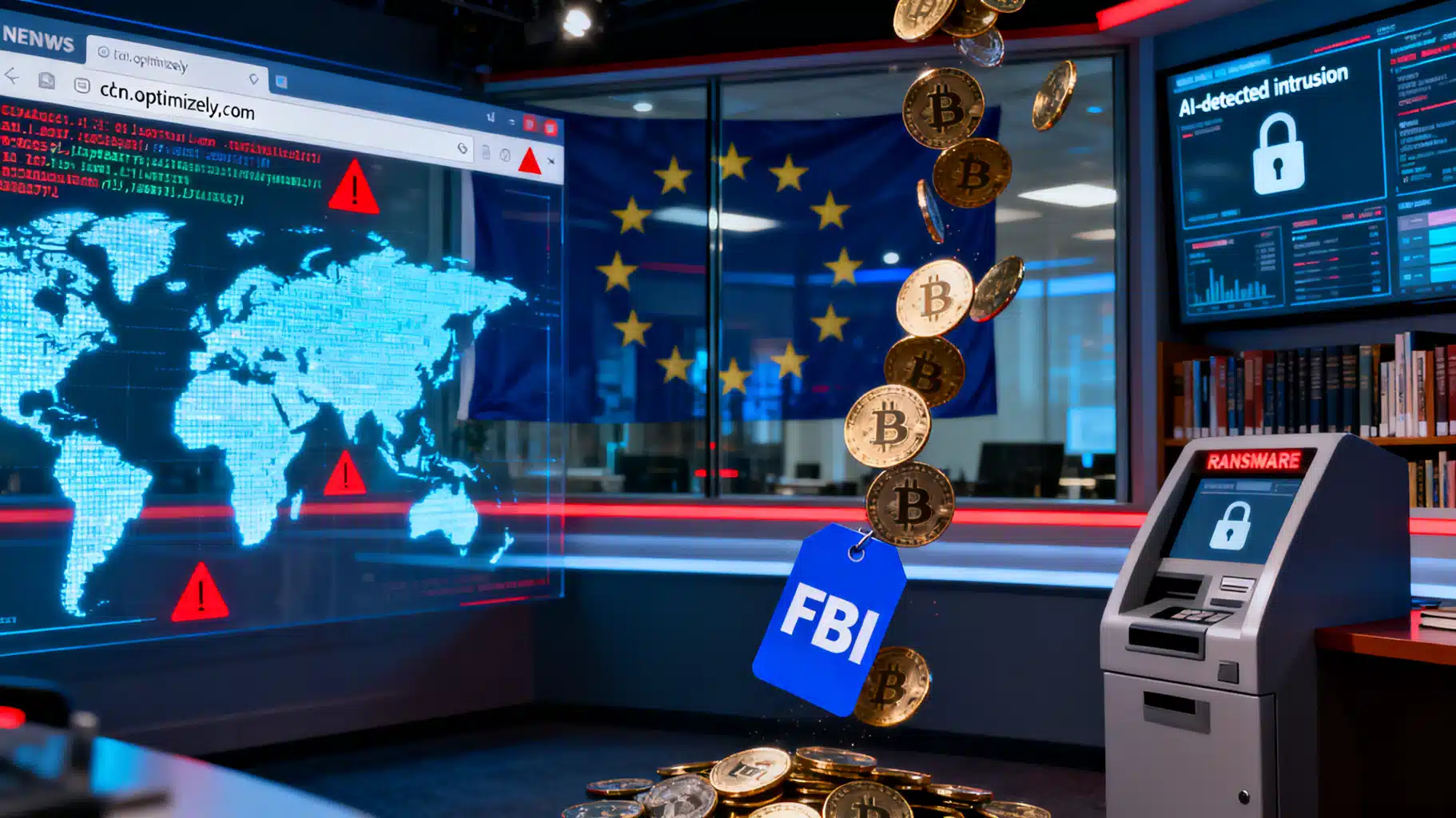
Image used for representation purposes only.
The hacker story of November 2026: supply‑chain ambushes, AI‑assisted intrusions, and high‑stakes takedowns
Hackers are closing out 2026 with a flurry of headline‑grabbing operations that reveal how fast the threat landscape is evolving. In the past week alone, a JavaScript supply‑chain attack on Optimizely’s web experimentation platform briefly turned trusted code running on hundreds of major websites into a malware delivery channel; the European Commission confirmed an AI‑assisted cyberattack that forced some internal tools offline; U.S. officials said they froze or seized more than $1.2 billion tied to North Korea’s record crypto heists; and JPMorgan Chase disclosed a third‑party breach that exposed customer and employee contact data. Meanwhile, a ransomware hit on Queens Public Library shows how public services remain in the crosshairs. (bleepingcomputer.com )
What’s new about the latest hacker tactics
-
Client‑side supply chain, at scale: On November 16, attackers exploited a flaw in Optimizely’s Experimentation account sign‑up flow to modify customer “Project JavaScript,” which is served to site visitors from Optimizely’s own CDN. Security researchers and the company say malicious snippets reached at least 178 organizations, where injected code attempted card skimming, crypto‑wallet swaps, cookie and screenshot theft, and even delivered mobile exploit kits to iOS users. Optimizely says it fixed the vulnerability, removed injected code, and added protections; defenders note that stricter Content Security Policies blunted some impact. (pages.optimizely.com )
-
AI in the attack chain: On October 22, an AI‑assisted attack hit a key European Union institution, with officials confirming the use of AI tools to probe for and exploit weaknesses; most affected apps have since been restored. In parallel, an FBI FLASH last week warned that threat actors have begun to weaponize frameworks like ARTEX to automate intrusion steps, increasing scale and speed. (apnews.com )
-
Deepfakes and social engineering: U.S. authorities say a North Korean campaign dubbed FaceStealer lured targets into look‑alike Zoom/Teams/Meet calls, recorded their videos, and pushed malware as a “fix” for staged meeting glitches—netting over $400 million in crypto theft over 18 months before the FBI and DOJ disrupted associated cloud infrastructure on November 12. Officials also detailed actions to freeze or seize more than $1.2 billion tied to the recent multi‑billion‑dollar Binance theft attributed to DPRK actors. (fbi.gov )
Who’s being hit right now
-
Media, tech, retail, and finance via third‑party code: The Optimizely incident briefly impacted high‑traffic sites across industries, illustrating the “concentration risk” when many brands depend on a single upstream script. Multiple security firms traced the malicious loader to Optimizely’s CDN; organizations serving the snippet from their own domains were also affected. (bleepingcomputer.com )
-
Banks and payments: On November 19, JPMorgan Chase said third‑party marketing data was leaked—largely customer and staff emails and some phone numbers. Visa and Mastercard confirmed exposure of some marketing data but no payment systems impact. The bank said the leak was unrelated to an earlier software outage. (apnews.com )
-
Government and courts: In October, Arizona’s court system disclosed that personal information for more than a million people was stolen in a cyberattack, underscoring the persistent targeting of public‑sector data stores. (apnews.com )
-
Public services: Queens Public Library, which serves 2.3 million residents across 66 branches, has spent two weeks recovering from a ransomware attack disclosed November 5 that knocked out its website, mobile app, and most public computers, though some services have been restored. (ny1.com )
-
Healthcare and data brokers: 2026 has already seen healthcare records for tens of millions exposed. Notably, DentaQuest reported a 15‑million‑person health data breach, while medical record host CareCloud confirmed data theft affecting at least 3.7 million—illustrating why hospitals and vendors remain prime ransomware and extortion targets. (techcrunch.com )
Law enforcement’s counter‑moves
-
North Korea focus: On November 12, the Justice Department announced actions to disrupt DPRK’s cryptocurrency theft ecosystem, including seizing cloud resources used in FaceStealer and freezing or seizing more than $1.2 billion in assets linked to the Binance theft attributed to North Korean actors. The FBI published public guidance describing FaceStealer’s social‑engineering playbook. (therecord.media )
-
Disrupting initial access: On November 12, an international task force disrupted the Gootloader malware and botnet, long used as a ransomware precursor through SEO‑poisoned downloads and compromised WordPress sites. An accompanying FBI FLASH tied Gootloader infrastructure to millions in ransomware payments. (justice.gov )
-
Hitting enablers and infrastructure: In July, the U.S. Treasury sanctioned First VPN Service (1VPNS) and others for enabling ransomware crews, following a May Cross‑EU takedown of the criminal VPN’s infrastructure coordinated by Eurojust and Europol with FBI support—part of a broader push to deny criminals the safe‑harbor tooling that masks their operations. (dejavu.org )
Why this wave matters
-
Third‑party trust is today’s soft underbelly. The Optimizely breach didn’t require compromising each victim organization—only a single vendor account flow—turning a convenience layer into an attack surface. The pattern mirrors other software supply‑chain compromises this year and raises tough questions for risk officers about inventorying and restricting client‑side scripts, enforcing Content Security Policy, and monitoring for anomalous outbound connections in browsers. (bleepingcomputer.com )
-
AI is lowering attacker costs—and lifting their ceiling. From automated recon/exploitation frameworks flagged in FBI advisories to AI‑made meeting deepfakes in FaceStealer and the EU’s first publicly confirmed AI‑assisted institutional incident, machine‑generated content and automation are compressing the time between phishing and full compromise. Expect sharper social engineering and faster lateral movement as models and tooling continue to improve. (ic3.gov )
-
The human toll is rising. Beyond corporate balance sheets, AP/FRONTLINE reporting this week traced the deadly arc of “sextortion” rackets that coerce teens into sending intimate images and then extort them—an abuse that global law enforcement is now prioritizing alongside financially motivated intrusions. (apnews.com )
The numbers behind the headlines
The FBI’s latest Internet Crime Report (covering 2025, released in April 2026) logged more than one million complaints and nearly $21 billion in losses, with investment fraud (often crypto‑linked) the top category by dollars lost. Those figures set the context for 2026’s escalation and the government’s increasingly aggressive seizures and advisories. (fbi.gov )
What to watch next
-
Optimizely fallout: Expect forensic disclosures from affected brands and more guidance on client‑side controls. Optimizely’s status page and initial report indicate containment as of November 17, but incident‑response timelines and any regulatory notifications will extend into December. (status.optimizely.com )
-
AI‑assisted intrusion tooling: Governments and CERTs are likely to issue further technical alerts on frameworks like ARTEX; enterprises should test detections for automated scanning and exploitation patterns highlighted in recent FBI notices. (ic3.gov )
-
Critical infrastructure and public services: Healthcare and civic institutions remain prime ransomware targets; new joint advisories this year specifically called out groups like Medusa and Gunra for sustained targeting of hospitals. Boards should validate that segmentation, offline backups, and response playbooks are current. (beckershospitalreview.com )
-
DPRK crypto operations: Following the November 12 actions, watch for additional seizures and potential arrests tied to North Korea’s social‑engineering and open‑source tampering campaigns as investigators trace money flows and developer compromises. (therecord.media )
Bottom line: November 2026’s hacker activity shows three converging realities—vendors and the browser are high‑leverage targets; AI is now a routine part of the adversary toolkit; and coordinated law‑enforcement pressure can meaningfully dent criminal ROI. The gap between those forces is where the next wave of incidents—and defenses—will be decided.
Related Posts
Nintendo says third‑party survey breach exposed limited, older employee data—no customer info impacted
Nintendo confirms a third-party survey tool exposed older, limited employee data—no customer or financial information affected. June 16, 2026.

What Is a Data Breach? Definitions, Real-World Examples, and the 2026 Rules You Need to Know
A clear, timely explainer on data breaches—definitions, 2024–2026 case studies, and what new U.S./EU rules require when the worst happens.
Google Play Store, November 2026: fees, third‑party stores, cars, and AI reshaping the app economy
Google Play’s late‑2026 makeover: new fee model, U.S. third‑party stores, in‑car redesign, AI‑powered discovery, and tighter child‑safety rules.