Inside Jensen Huang’s Nvidia: A Culture Built for Speed Meets Its Reckoning
Inside Nvidia’s reckoning: How Jensen Huang’s high-speed, no-hierarchy culture collided with governance—and what changes under interim CEO Colette Kress.
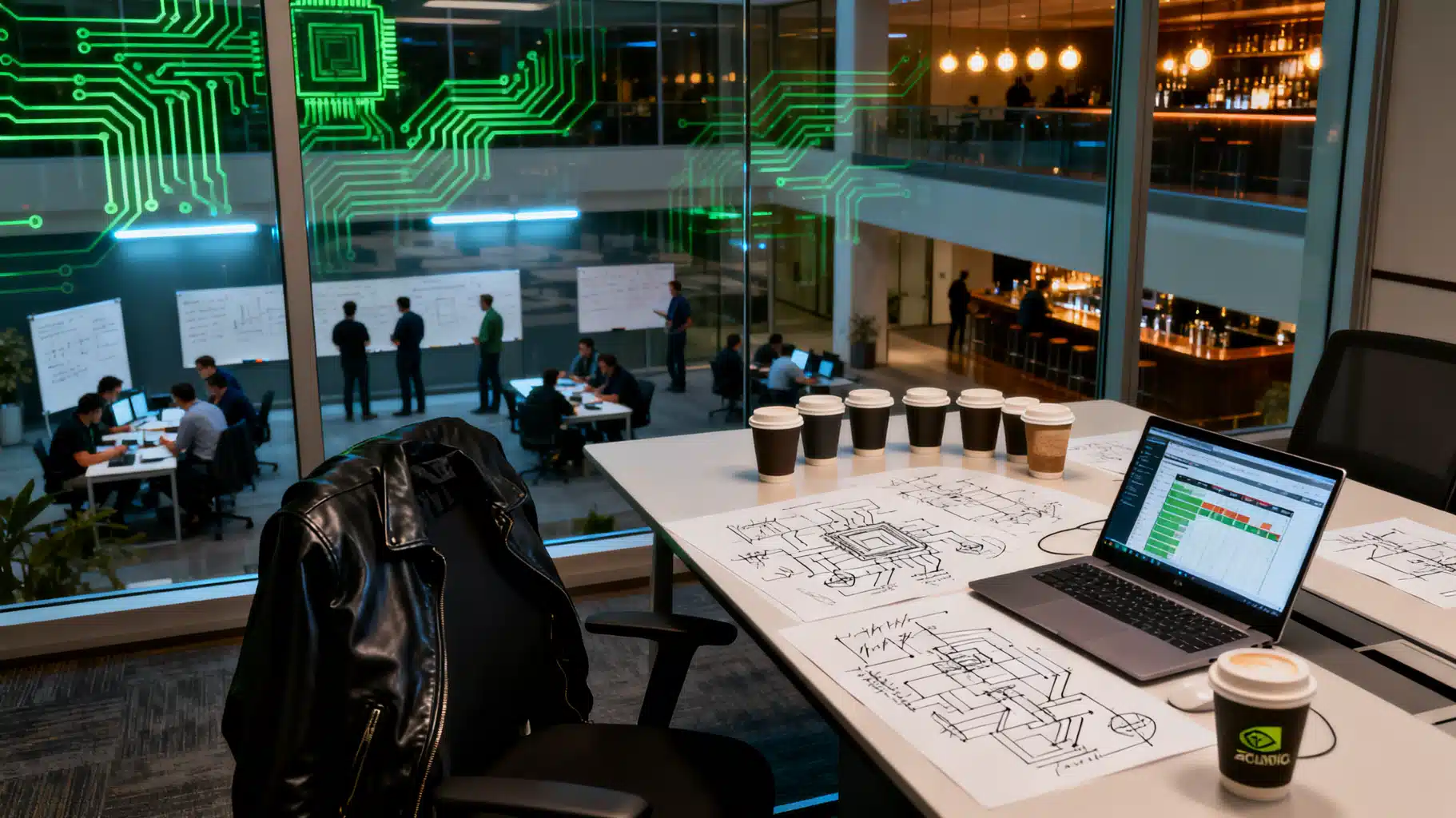
Image used for representation purposes only.
The culture at the center of Nvidia’s storm
Nvidia’s once-impervious aura took a dramatic turn this month. On November 11–12, 2026, the company’s board accepted the immediate resignation of cofounder and CEO Jensen Huang and named longtime CFO Colette Kress interim chief executive. The company formalized the move in an SEC filing and a press release, underscoring that operations and the product roadmap would continue without interruption. (d18rn0p25nwr6d.cloudfront.net )
Huang’s exit has put Nvidia’s workplace culture—long shaped in his image—under an intense spotlight. A deeply reported Wall Street Journal feature described an environment defined by Huang’s flat structure, blistering feedback, and growing influence of family members, while also noting the loyalty of employees who saw him as a charismatic, mission-driven leader. (apple.news )
How Huang ran Nvidia: flat, fast, and demanding
For years, Huang rejected a traditional hierarchy. He amassed roughly 60 direct reports, avoided one‑on‑one meetings, and preferred large, freewheeling sessions where the entire leadership team learned from the same feedback in real time. Fortune chronicled this approach in late 2024, adding that Huang worked or thought about work essentially every waking moment—and seven days a week. (fortune.com )
Huang himself has repeatedly embraced the “always on” ethos in public conversations, including a 2024 interview at Stripe Sessions where he said point‑blank, “I work seven days a week.” (stripe.com )
Nvidia’s published Code of Conduct reinforces cultural tenets—speed, candor, and “no politics or hierarchy” blocking invention—that many insiders say helped the company move faster than much larger rivals. Those same principles, critics argue, also enabled an abrasive style and concentration of power. (images.nvidia.com )
Praise, pressure, and the ‘royal family’ effect
The Journal’s reporting paints an organization that could feel like a “family business,” with Huang’s adult children increasingly visible inside the company. Accounts from current and former staff described withering, public critiques—“eviscerations,” as one executive put it—alongside frequent celebratory gatherings and a campus bar where Huang sometimes mingled. The story also reported that in meetings he used terms like “dead face” or “goldfish” when employees faltered. (apple.news )
Even so, the picture was not monochrome. Several employees and alumni defended the culture as tough but “intellectually honest” and credited Huang’s hands‑on leadership with making Nvidia a once‑in‑a‑generation engineering success. Many described a leader who learned the details, moved fast, and inspired intense followership. (apple.news )
The resignation—and immediate aftershocks
The upheaval around Huang’s personal conduct culminated in his resignation on November 11–12. Nvidia’s 8‑K states the board accepted his departure and installed Kress as interim CEO, while veteran director Harvey Jones became the company’s first‑ever chair. The company told investors the transition would not disrupt execution. (d18rn0p25nwr6d.cloudfront.net )
Five days later, the board created a National Security and Export Control Oversight Committee—an unusual governance step that elevates export‑control and national‑security risk to standing, board‑level oversight with outside experts. (nvidianews.nvidia.com )
On November 17, during Nvidia’s earnings call, Chair Harvey Jones addressed the leadership question directly: the board does not intend to reinstate Huang as CEO. TechCrunch reported his comments and the board’s rationale that Huang resigned over “personal behavior” inconsistent with company policies and norms. (techcrunch.com )
Inside the workforce: petitions, anxiety—and a pay reset
Internally, the transition has been raw. A public campaign to bring Huang back surpassed 180,000 signatures within days, including thousands self‑identifying as Nvidia employees and endorsements from prominent tech figures, Axios reported. But the board’s position has not changed. (axios.com )
At Nvidia’s first all‑hands meeting without Huang on November 18, Kress moved quickly to steady the ranks. According to reporting by WIRED, she announced accelerated pay raises and additional equity grants in December—months ahead of the normal cycle—and acknowledged that compensation and board transparency were employees’ top concerns. Co‑founder Chris Malachowsky told staff the company’s values are lived, not printed on posters, and would endure. (wired.com )
What the culture delivered—and where it strained
- Speed as strategy: Nvidia’s flat structure and intolerance for “normal” pace let it move from gamer GPUs to a datacenter “full‑stack” for AI at blistering speed. This bias toward action, celebrated internally, is echoed in the Code’s “Speed and Agility” value and was central to Nvidia’s dominance. (images.nvidia.com )
- Candor with consequences: Forthright critique pushed engineering quality higher, according to supporters. But the same edge, when delivered in public, could leave teams bruised and wary—especially as the company’s headcount swelled to tens of thousands. (apple.news )
- The cult—and cost—of “always on”: Huang’s example of seven‑day workweeks set a tone. High performers thrived; others described burnout risk and the difficulty of balancing family life with Nvidia’s cadence. (fortune.com )
- Family gravity: The growing presence and influence of Huang’s children amplified perceptions of a “royal family” inside a public company—energizing some employees who embraced the founding narrative while troubling others who saw blurred lines. (apple.news )
What changes now under Kress
Culture is path‑dependent, but leadership matters. Near‑term signals suggest Nvidia will try to preserve its execution tempo while professionalizing governance:
- Board‑level guardrails: The new National Security & Export Control committee, with outside experts and quarterly sessions, points to tighter oversight of geopolitical and compliance risks intertwined with Nvidia’s AI supply chain. (nvidianews.nvidia.com )
- Stabilize and retain: The accelerated compensation plan is a tactical bridge to quell churn while the board conducts a CEO search. Kress also told investors the priority is keeping teams focused and safe through the transition. (wired.com )
- Clearer structures: Without a founder‑CEO’s gravitational pull, Nvidia may need more explicit operating mechanisms—succession depth, spans of control, and consistent management norms—to avoid bottlenecks that a 60‑direct‑report model could mask. (fortune.com )
The bigger question for Silicon Valley
Huang’s fall reverberates beyond Nvidia. It tests whether an “indispensable founder” culture—with its speed, risk tolerance, and intensity—can coexist with the demands of a $4‑trillion public company operating at the center of national‑security debates. The answer will be shaped by what Nvidia does next: who it hires, how it governs, and whether it can keep its edge without a singular leader at the helm. (axios.com )
What to watch
- CEO search: Will Nvidia pick an internal operator steeped in its “no‑hierarchy” ethos or an external leader who adds distance from the founder era? The board says it is looking at both. (nvidianews.nvidia.com )
- Retention and recruiting: Whether the pay reset and clear communication are enough to deter departures among core architects and program leads. (wired.com )
- Cultural codification: Watch for more formal mechanisms—leadership training, manager expectations, org‑design changes—that translate “move fast, no politics” into sustainable practice across 40k‑plus people. (images.nvidia.com )
- Governance hardening: The new board committee may presage additional oversight moves around export controls, related‑party risks, and executive conduct. (nvidianews.nvidia.com )
One reality is already clear: Nvidia’s culture was inseparable from Jensen Huang. The next chapter will show whether that culture can be both preserved and improved—keeping the urgency that powered an AI epoch while building the guardrails that a company of Nvidia’s scale now requires. (apple.news )
Related Posts
Jensen Huang Under Fire: Nvidia Opens Probe Into Alleged Chinese Spy Targeting as Markets and Congress React
Nvidia CEO Jensen Huang admits affair as board probes reported Chinese spy plot. Congress seeks briefing Nov. 18 amid market, policy fallout.
Marvell Stock Soars on Nvidia Endorsement, AI Optics Momentum, and Big Guidance
Marvell stock spikes after Jensen Huang calls it the “next trillion‑dollar company,” capping strong AI‑driven earnings and a $2B Nvidia tie‑up.
Corning (GLW) soars after Nvidia deal: Inside the AI fiber supercycle and what comes next
Corning (GLW) jumps on a new Nvidia partnership and strong Q1. Here’s what drove the move, the numbers, risks, and what to watch next.