
Designing Exceptional API Developer Portal Documentation UX: A Practical Guide
A practical guide to designing API developer portal documentation UX that reduces time to first 200 OK and scales through strong IA, tooling, and governance.

Image used for representation purposes only.
What “documentation UX” means for API developer portals
Great API docs are not just accurate—they are designed for flow. Documentation UX is the set of content, interaction, and operational patterns that minimize cognitive load from the moment a developer lands on your portal until their first 200 OK in production. It blends information architecture, writing, tooling, accessibility, and governance into a single, testable experience.
Outcomes to optimize (and how to measure them)
- Time to first successful request (TTSR): target < 5 minutes from landing to 200 OK.
- Time to Hello World (TTHW): under 3 minutes with curl or the official SDK.
- Error resolution rate from docs alone: > 70% of issues solvable without support.
- Search success: < 15% pogo-sticking (back to results) and increasing zero-result alerts turned into new content.
- Adoption and retention: SDK install-to-first-call conversion and monthly active tokens.
- Quality signals: broken-link rate ≈ 0; outdated page alerts resolved within SLA.
Core journeys and information architecture
Design IA around real jobs-to-be-done, not your org chart. Typical top-level nav:
- Get started: quickstarts segmented by language and use case.
- Build: API reference, guides, tutorials, sample apps, SDKs, CLI.
- Operate: authentication, environments, rate limits, errors, webhooks, observability.
- Manage: account, keys, roles, billing, usage, quotas.
- Evolve: versioning, changelog, deprecations, migrations.
- Support: troubleshooting, FAQs, community, contact.
Wayfinding patterns:
- Sticky left nav for deep sections; right-side on-page TOC with anchor links.
- Breadcrumbs mirroring IA depth.
- Consistent page templates so parameters, examples, and errors always appear in the same order.
Writing for action: a micro-pattern library
- Lead with the outcome: “Create a payment in 3 steps.”
- Show, then tell: runnable example first; explanation after.
- Frontload prerequisites, links to keys/sandbox, and expected 200 response.
- One concept per page; link out instead of overloading.
- Use consistent labels: Request, Response, Path params, Query params, Body, Headers, Errors.
- Provide copy buttons and language switchers for every snippet.
Reference that reduces cognitive load
A world-class API reference is predictable, scannable, and example-rich.
- Endpoints grouped by resource.
- Each endpoint page contains:
- Summary line and when to use it.
- Authentication mode and scopes.
- Path template with example.
- Parameter table: name, location, type, required, default, constraints, description, example.
- Request/response examples with minimal and full variants.
- Error matrix with actionable remediation.
- Idempotency and rate limit notes.
- SDK parity table and links to source.
Parameter table pattern:
- Types use a consistent taxonomy (string, integer, decimal, enum, boolean, object, array, date-time ISO 8601).
- Enumerations show allowed values and a brief when-to-use.
- Nullable and deprecated clearly flagged.
Quickstarts that earn trust
Quickstarts must be short, runnable, and language-specific. Keep the flow linear and remove surprises.
Prerequisites
- Sign in, create an API key in sandbox.
- Install SDK or ensure curl available.
- Verify environment variables API_KEY and API_BASE.
Example (curl):
# 1) Set your key
export API_KEY="sk_test_123"
export API_BASE="https://api.sandbox.example.com"

# 2) Make your first request
curl -sS -X POST "$API_BASE/v1/messages" \
  -H "Authorization: Bearer $API_KEY" \
  -H "Content-Type: application/json" \
  -d '{"to":"+15555550123","body":"Hello, world"}' | jq .

# 3) Expected 200 response (truncated)
# { "id": "msg_abc", "status": "queued" }
Example (JavaScript/Node):
import Example from "@example/sdk";
const client = new Example({ apiKey: process.env.API_KEY });
const msg = await client.messages.create({ to: "+15555550123", body: "Hello, world" });
console.log(msg.status);
Principles
- “Three steps or less” before the first success.
- Inline environment setup and pitfalls (e.g., corporate proxies, TLS).
- Show sandbox vs production differences with callouts.
Interactive tools that multiply comprehension
- Try-it console bound to your OpenAPI, with environment toggles and automatic auth injection.
- Postman collection and “Run in Postman” button.
- SDKs with snippet switching (curl, JS, Python, Ruby, Go, Java, C#).
- Live webhooks tester with payload inspector and signature verification helper.
- JSON schema viewers and response expanders for large objects.
Search and discovery that actually works
- Prominent global search with typeahead, synonyms, and typo tolerance.
- Facets for “Guides,” “Reference,” “Tutorials,” “Changelog.”
- Rich results: show endpoint, method, and path in the result card.
- Instrument queries with zero results to create new content.
Accessibility and global readiness
- WCAG 2.2 AA: contrast, focus states, keyboard navigation, skip links, semantic headings.
- Code blocks accessible to screen readers with ARIA labels and non-color cues for diffs.
- Localize core flows; keep code and strings externalized. Reflect number/date formats.
- Right-to-left layout readiness and font choices with broad glyph coverage.
Visual design system for docs
- Use a tokenized design system so UI and docs stay in sync.
- Typography tuned for code and prose; responsive tables with horizontal scroll.
- Syntax highlighting that works in dark/light themes; persistent theme toggle.
- Admonitions for Note, Tip, Caution, Deprecated; consistent icons and colors.
- Deep-linkable headings with visible copy-link anchors.
Security, privacy, and compliance content
- Never show real keys; redact patterns and mark screenshots as illustrative.
- Document data handling: residency, retention, encryption, sub-processors.
- Include ToS, SLA, DPA, and region-specific compliance pages (e.g., GDPR/CCPA).
- Explain PII in logs, secrets rotation, and least-privilege scopes.
Versioning, change management, and deprecations
- Commit to semantic versioning for SDKs and surface the policy.
- Maintain a human-readable changelog plus machine-readable RSS/Atom/JSON feed.
- Provide migration guides with code diffs and “before/after” examples.
- Deprecation lifecycle: announce date, sunset date, headers in responses, and self-serve compatibility layers.
Operating the docs: a docs-as-code pipeline
- Source control with PR reviews from eng, DX, and support.
- Single source of truth: generate reference from OpenAPI; lint with Spectral rules.
- CI gates: broken links, spelling, inclusive language, style linting, and sample build tests.
- Snippet automation: extract from tested examples so docs never drift from code.
- Preview environments for every PR; visual diffs for content and navigation.
Observability and continuous improvement
- Page analytics tied to events: copy-clicks, language-tab usage, try-it success.
- Funnel tracking for quickstarts to compute TTSR and drop-off points.
- On-page feedback widget with freeform text and severity.
- Search analytics: top queries, zero-result queries, low-CTR results.
- Create a docs scorecard and review it monthly with clear owners per area.
Surrounding surfaces: beyond the docs
- Keys and environments: simple key creation, scoped tokens, rotating and revoking.
- Usage dashboards: requests, errors, latency, rate-limit events; deep links to docs.
- Billing: transparent pricing, overage behavior, alerts, and receipts.
- Support: triage form mapping to product areas, SLAs, and incident banner integration.
- Community: forum/Slack/Discord with code-of-conduct and searchable archives.
Common pitfalls (and how to fix them)
- Wall-of-text guides without runnable examples → Lead with a 3-step quickstart.
- Inconsistent parameter names or casing between endpoints → Establish guidelines and a style linter.
- Error sections that say “something went wrong” → Provide structured errors with codes, causes, and remediation.
- Copy-pasted examples that drift from API behavior → Generate from tests and CI-verify.
- Dead links and stale screenshots → Link checker in CI; prefer text and diagrams over UI screenshots.
- Hidden authentication gotchas → Central auth page plus endpoint-side callouts.
- “Magic” SDKs that skip concepts → Pair SDK examples with equivalent raw HTTP curl.
Example page template
Use a consistent, skimmable template for every endpoint:
- Summary and use case
- Request
- Method and path
- Auth and scopes
- Path/query/body parameters (table)
- Example request (curl + SDKs)
- Response
- Success example (short + full)
- Error examples (most common 3–5)
- Notes
- Idempotency, pagination, rate limits, webhooks/events
- Related
- Conceptual guide, tutorial, sample app, SDK source, changelog entries
A pragmatic 30-day rollout plan
- Days 1–5: Audit IA, define jobs-to-be-done, pick success metrics, create page templates.
- Days 6–15: Convert reference to OpenAPI-first; wire Spectral + link-check CI; ship 3 language quickstarts.
- Days 16–25: Add try-it console, Postman collection, error taxonomy, and on-page feedback.
- Days 26–30: Instrument analytics, publish changelog feeds, run usability tests, fix top findings.
Checklist: ship-ready API docs UX
- TTSR < 5 minutes, validated by usability tests.
- Quickstarts per language and use case; runnable with copy buttons.
- OpenAPI-generated reference with consistent parameter and error tables.
- Try-it console, SDK snippets, and Postman collection.
- Auth, rate limits, pagination, webhooks, and errors documented consistently.
- Versioning policy, changelog, deprecation lifecycle, and migration guides.
- Accessibility (WCAG 2.2 AA), dark mode, responsive tables.
- Docs-as-code pipeline with linting, tests, previews, and ownership.
- Analytics, search tuning, and feedback loop tied to a monthly scorecard.
- Security, privacy, billing, and support surfaces integrated and cross-linked.
Designing a best-in-class API developer portal isn’t about adding more pages—it’s about crafting a predictable, testable path to success. Optimize for the first 200 OK, and the rest of the experience will compound in your favor.
Related Posts

Contract‑First API Design with OpenAPI: A Practical Guide for Teams
A hands-on guide to contract-first API design with OpenAPI: workflow, examples, tooling, testing, security, versioning, and CI/CD governance.
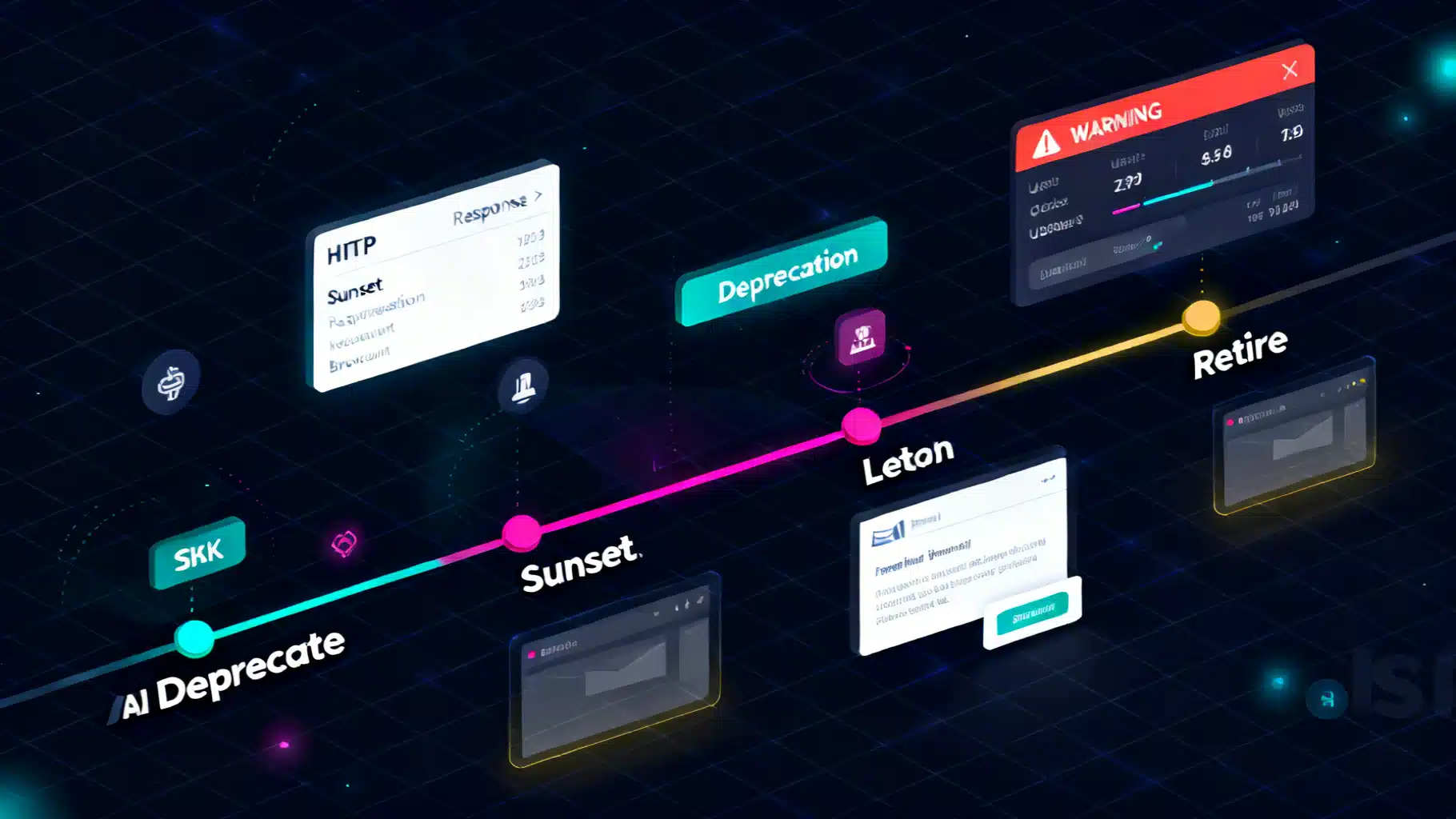
The Complete Guide to API Endpoint Deprecation Communication
A practical, end-to-end playbook for API endpoint deprecation communication: timelines, headers, templates, and runbooks that prevent breaking changes.
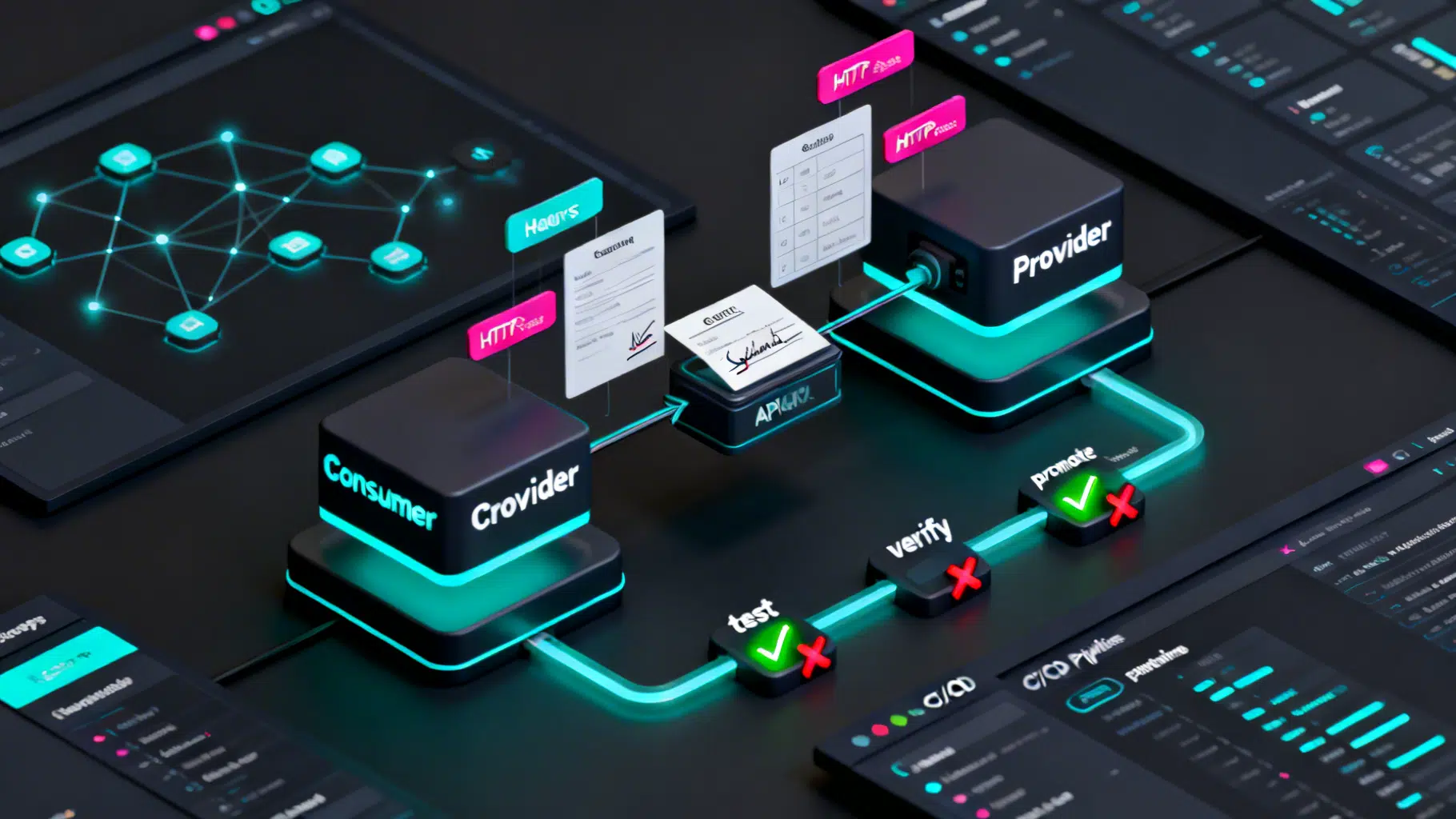
Consumer-Driven Contract Testing: A Practical Guide to Safer, Faster API Delivery
A practical guide to consumer-driven contract testing: how it works, why it matters, and how to implement it with CI/CD to ship APIs faster without breaks.