
Practical Strategies for API Integration Testing: From Contracts to Chaos
A practical guide to API integration testing: contracts, data, environments, tooling, CI/CD, performance, security, and resilience.
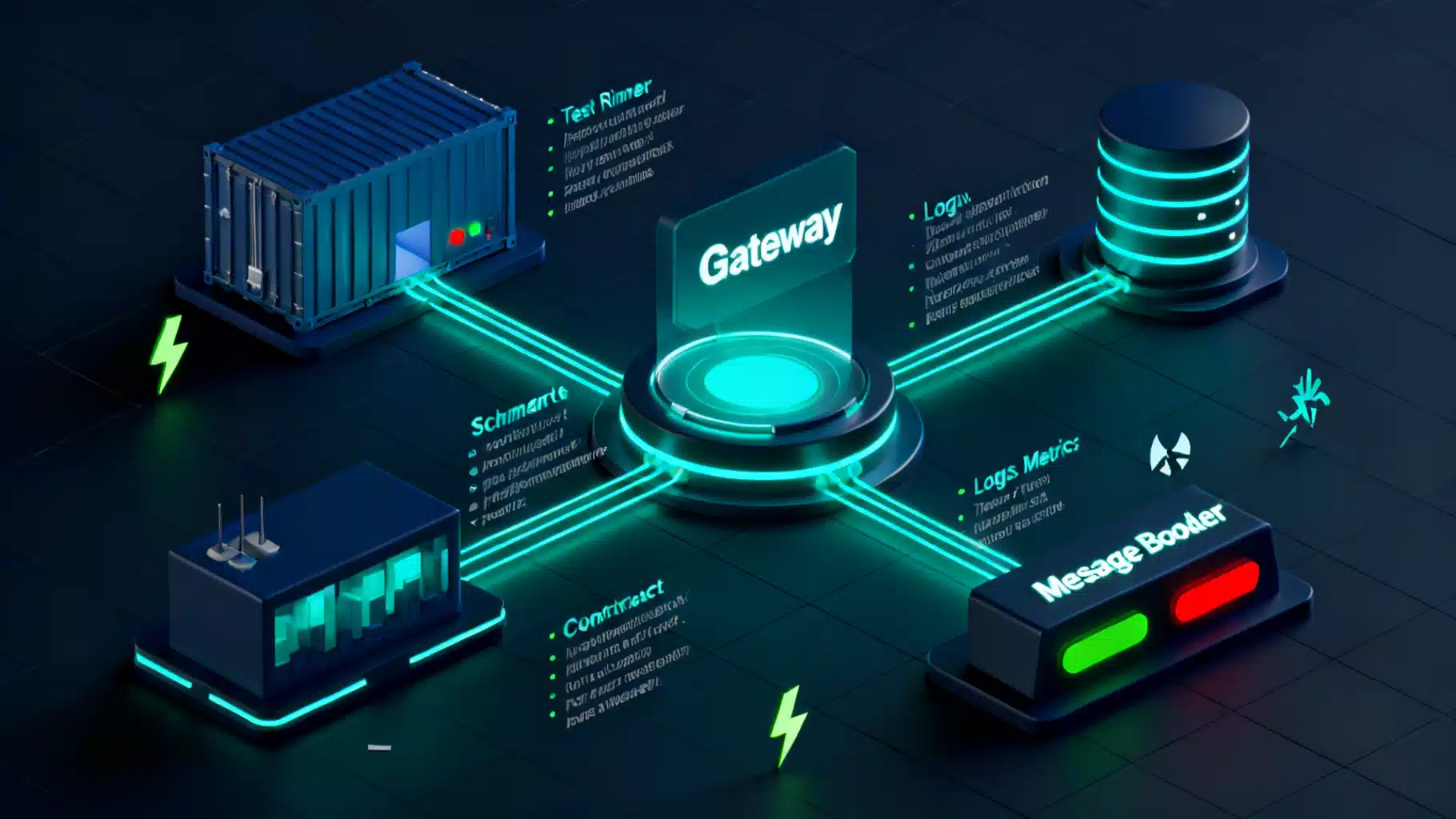
Image used for representation purposes only.
Why API integration testing matters
APIs are the connective tissue of modern systems. Unit tests validate isolated logic, but only integration tests reveal the real-world behavior of authentication, schema evolution, idempotency, retries, timeouts, data contracts, and downstream failures. A solid strategy prevents expensive regressions and enables teams to ship faster with confidence.
Test taxonomy: get the layers right
- Unit tests: Functions/classes in isolation.
- Component tests: A service with its local dependencies (e.g., DB) but external calls stubbed.
- Contract tests (CDC): Validate provider and consumer agree on request/response shapes and semantics.
- Integration tests: Multiple real components collaborating (e.g., service + DB + message broker + another service’s sandbox).
- End-to-end (E2E): Full slice through the system, closest to production, smallest in number.
- Synthetic monitoring: Production checks that continuously validate core API flows.
Aim for many fast component/contract tests, fewer heavier integration tests, and very few E2E checks.
Core principles
- Test the contract, not the implementation.
- Prefer deterministic, isolated, and idempotent scenarios.
- Design for testability: injectable clocks, configuration, and endpoints for health/ready.
- Favor ephemeral, production-like environments to minimize “works-on-my-machine.”
- Observe, don’t guess: correlate with logs, metrics, and traces.
Scoping and prioritization
- Risk-based: prioritize high-traffic endpoints, money paths, data integrity, and auth flows.
- Coverage beyond lines: capture endpoint-method-scenario coverage and spec coverage (OpenAPI/gRPC proto).
- Define SLO-derived tests: latency (p95/p99), error budgets, and retry/backoff expectations.
Environment strategy
- Local dev: containers with Testcontainers/Docker Compose for DB, cache, brokers, and mock external APIs.
- CI ephemeral stacks: spin up on every PR with IaC; destroy after run.
- Shared staging: last-mile tests only; avoid using it as the primary integration arena.
- Third-party sandboxes: prefer official sandbox environments; fall back to mocks only when necessary.
Tips:
- Use stable test URLs, feature flags, and versioned config.
- Mirror production infra aspects that matter (TLS, load balancers, auth gateways, service mesh policies).
Data management and isolation
- Seed synthetic data per test; avoid relying on shared fixtures.
- Clean up via transactions rollbacks, disposable databases, or snapshot/restore.
- Make writes idempotent; use idempotency keys for POSTs.
- Control time with a time service or injectable clock.
- Mask PII and comply with privacy requirements; never use raw prod data.
Contract testing that scales
- Generate/verifies schemas via OpenAPI/JSON Schema or Protobuf for gRPC.
- Consumer-Driven Contracts (CDC): each consumer publishes expectations; the provider verifies them in CI.
- Enforce backward compatibility rules: additive changes only, deprecate before removing fields, maintain default values.
- Validate both shape and semantics: enums, pagination formats, error codes, and business invariants.
Synchronous API integration tests (REST/gRPC)
What to assert:
- Status codes and error models (4xx vs 5xx), headers (cache, CORS, security), content type, and encoding.
- AuthN/AuthZ: access tokens, scopes/roles, mTLS, key rotation behavior.
- Pagination, filtering, and sorting determinism.
- Idempotency and safe retries under timeouts and partial failures.
- Concurrency controls: ETags, optimistic locking, or version fields.
- Rate limiting and quota enforcement with proper 429 handling.
Useful tooling:
- HTTP: REST Assured, SuperTest, pytest + requests.
- gRPC: grpcurl, go/grpc testing libs, pytest-grpc.
- Schema validation: Schemathesis, Dredd, OpenAPI validators.
- Mocking upstreams: WireMock, MockServer, Hoverfly.
Asynchronous flows: events, queues, and webhooks
- For event-driven systems, validate publish-subscribe chains and data contracts on topics.
- Use an event “spy” consumer to capture and assert messages (keys, headers, ordering, delivery semantics).
- Handle eventual consistency with await patterns (e.g., Awaitility) and time bounds.
- Webhooks: verify signature validation, replay protection, retry policies, and idempotent handlers.
- Test outbox/inbox patterns and dead-letter queues.
Performance and resilience aligned with SLOs
- Load tests: baseline and p95/p99 latencies with realistic payloads.
- Stress and spike tests: observe autoscaling and backpressure.
- Soak tests: uncover resource leaks and memory fragmentation.
- Fault injection: latency, packet loss, HTTP 5xx, DNS failures, TLS handshake errors.
- Reliability patterns: circuit breakers, bulkheads, and timeouts—assert their trip/reset behavior.
Tools: k6, Gatling, Toxiproxy, service-mesh fault injection, chaos frameworks.
Security checks in integration pipelines
- AuthZ boundaries across tenants and roles.
- Input validation and deserialization safety; reject unknown fields when required.
- Rate limiting and abuse detection under concurrency.
- SSRF and egress control for proxying endpoints.
- Token lifetimes, refresh flows, and key rotation (JWKS) behavior.
- Align with OWASP API Security Top 10; integrate DAST (e.g., ZAP) in non-prod.
Observability-first testing
- Propagate correlation/trace IDs end-to-end and assert presence.
- Emit structured logs; assert critical log lines and absence of secrets.
- Capture metrics (success rates, latency) and compare against thresholds.
- Trace spans confirm call graphs, retries, and N+1 patterns.
CI/CD blueprint
- Lint and validate API specs (OpenAPI/Protobuf).
- Unit tests + static analysis.
- CDC provider and consumer verification.
- Component tests with local dependencies (DB/cache) via containers.
- Integration tests against ephemeral environment with critical upstreams.
- Security and performance smoke (short k6 suite).
- Deploy to staging; run a small E2E slice.
- Progressive delivery to production; synthetic checks gate rollout.
Minimal CI example
name: api-ci
on: [pull_request]
jobs:
  test:
    runs-on: ubuntu-latest
    services:
      postgres:
        image: postgres:16
        env:
          POSTGRES_PASSWORD: test
        ports: ['5432:5432']
      wiremock:
        image: wiremock/wiremock:3
        ports: ['8080:8080']
    steps:
      - uses: actions/checkout@v4
      - name: Validate OpenAPI
        run: npx @redocly/cli lint openapi.yaml
      - name: Install deps
        run: npm ci
      - name: Component & contract tests
        run: npm test --workspaces
      - name: Integration tests
        run: npm run test:integration
Example: concise HTTP integration test (Python)
import requests, os, time

BASE = os.environ.get('BASE_URL', 'https://localhost:8443')
TOKEN = os.environ['TEST_TOKEN']

headers = { 'Authorization': f'Bearer {TOKEN}', 'Idempotency-Key': 't-123' }

# Create
r = requests.post(f'{BASE}/v1/orders', json={'sku':'ABC','qty':2}, headers=headers, timeout=5)
assert r.status_code == 201
order = r.json(); oid = order['id']

# Read with pagination
r = requests.get(f'{BASE}/v1/orders?limit=1', headers={'Authorization': f'Bearer {TOKEN}'}, timeout=3)
assert r.status_code == 200
assert 'next' in r.json().get('page', {})

# Retry create is idempotent
r2 = requests.post(f'{BASE}/v1/orders', json={'sku':'ABC','qty':2}, headers=headers, timeout=5)
assert r2.status_code in (200, 201)
assert r2.json()['id'] == oid

# Eventually consistent status
deadline = time.time() + 10
while time.time() < deadline:
    s = requests.get(f'{BASE}/v1/orders/{oid}', headers={'Authorization': f'Bearer {TOKEN}'}, timeout=3)
    if s.json().get('status') == 'CONFIRMED':
        break
    time.sleep(0.5)
else:
    raise AssertionError('Order never confirmed')
Measuring what matters
- API spec coverage: endpoints × methods × scenarios.
- Behavior coverage: idempotency, pagination, errors, concurrency, rate limiting.
- Risk coverage: map tests to top user journeys and compliance requirements.
- Flakiness rate and mean time to diagnose (MTTD) via trace/log links in failures.
Common anti-patterns
- Treating staging as production: shared, flaky, and bottlenecked.
- Over-reliance on E2E UI tests to validate APIs.
- Mocking critical upstreams in integration suites (use sandboxes or ephemeral real services instead).
- Using production data or skipping cleanup.
- Silent retries that hide systemic faults.
30/60/90-day rollout
- 30 days: validate API specs in CI, add CDC for top consumers, containerize local dependencies, seed critical integration tests.
- 60 days: move to ephemeral CI environments, build data factories, add observability assertions, introduce short k6 smoke.
- 90 days: implement fault injection in CI, expand async event tests, define SLO-based gates, enable synthetic monitoring in prod.
Final thoughts
Effective API integration testing is a system design problem—about contracts, environments, and observability as much as assertions. Start with the riskiest flows, automate for speed, instrument for insight, and evolve toward resilient, production-like validation across the delivery pipeline.
Related Posts
Consumer‑Driven Contract Testing for APIs: A Practical Guide
Learn how consumer‑driven contract testing works, why it matters, and how to implement it for REST, GraphQL, and event-stream APIs with CI/CD integration.

API‑First Development: An End‑to‑End Workflow Guide
A practical, end-to-end API-first workflow: design, mock, test, secure, observe, and release with contracts as the single source of truth.
API Chaos Engineering: A Practical Playbook for Resilient Services
A practical guide to API chaos engineering for resilient APIs: principles, experiments, tooling, metrics, and CI/CD automation with examples.