
Building a Reliable AI Legal Document Review API: Architecture, Playbooks, and Safeguards
Designing an AI legal document review API: architecture, security, playbooks, evaluation, and examples for reliable, auditable contract analysis.
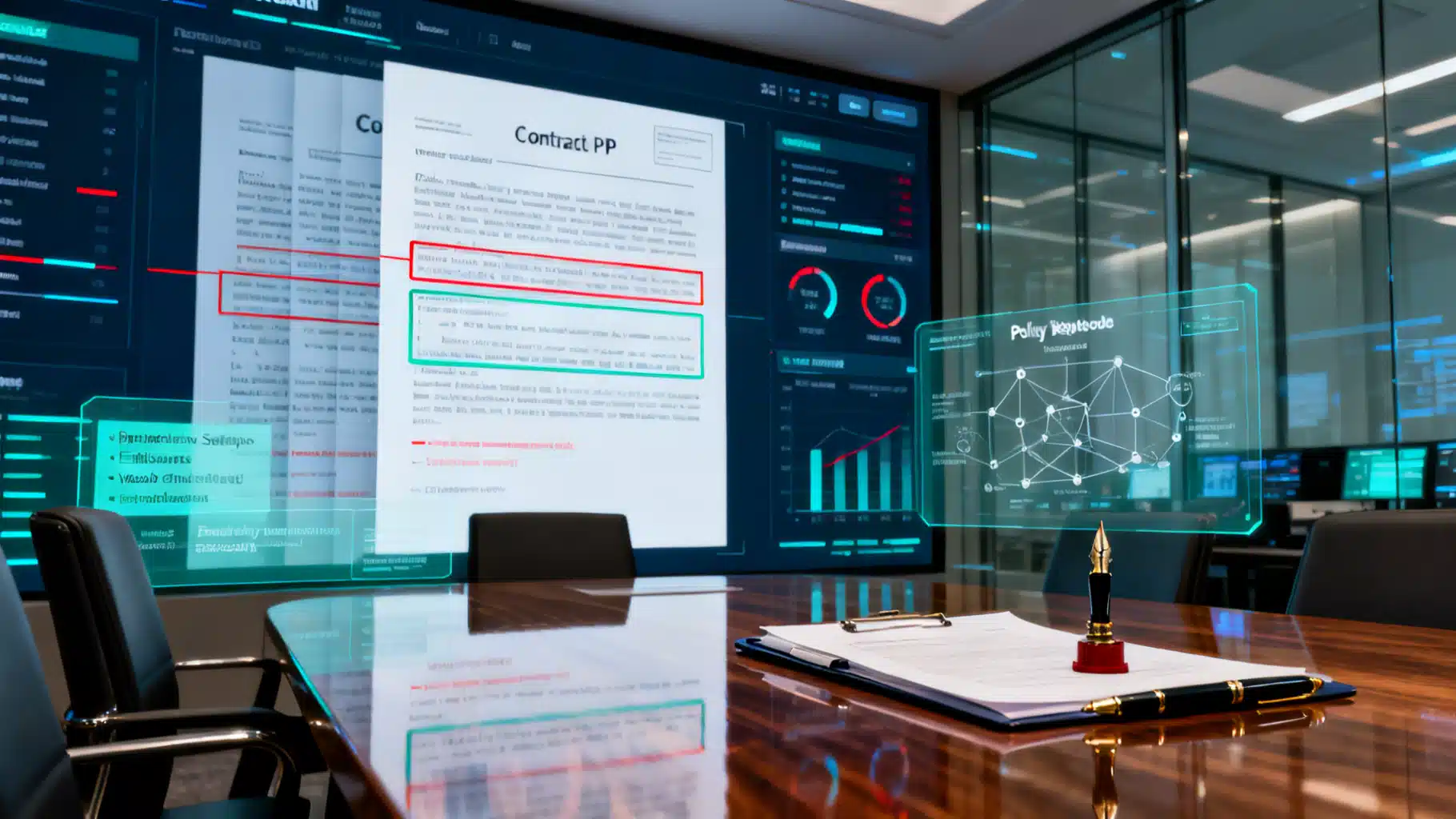
Image used for representation purposes only.
Overview
Artificial intelligence can turn legal document review from a manual slog into a measurable, auditable workflow. An AI legal document review API exposes this capability as a programmable service that ingests files, extracts structure, evaluates clauses against policy, and returns machine-readable findings. This article outlines core use cases, reference architecture, security and compliance must-haves, evaluation methodology, and implementation tips—including example endpoints and payloads.
High‑value use cases
- Contract intake triage: auto-route NDAs, MSAs, SOWs, DPAs, and DP addenda to the right queues with predicted risk and turnaround estimates.
- Clause extraction and normalization: map governing law, limitation of liability, indemnity, confidentiality, data processing, and IP to a common ontology.
- Risk scoring against playbooks: compare extracted clauses to policy thresholds (e.g., liability caps, breach notification hours, audit rights).
- Redline suggestions: propose clause edits or alternative language, with rationales and confidence.
- Regulatory checks: flag terms implicating privacy, export controls, financial services, or healthcare data.
- Portfolio analytics: surface deviation heatmaps and renewal risks across thousands of agreements.
Reference architecture
-
Ingestion layer
- Accept PDF, DOCX, image scans, email attachments, and ZIP bundles.
- Generate a stable document ID, compute cryptographic hash, and store file metadata (name, size, MIME type, checksum).
-
Parsing and OCR
- Use layout-aware parsers for headers/footers, tables, list items, and multi-column pages.
- Apply OCR to scanned PDFs; preserve bounding boxes and reading order.
-
Normalization
- Convert to a structured, tokenized representation: pages → blocks → lines → tokens, with coordinates and styles.
- De-duplicate boilerplate (repeating headers/footers, watermarks) to reduce noise.
-
Retrieval and knowledge grounding
- Chunk text semantically and index in a vector store.
- Maintain a clause library and policy playbooks. Use retrieval to ground LLM prompts with relevant exemplars and prior decisions.
-
Extraction and reasoning
- Hybrid stack: rules/regex for deterministic signals; small classifiers for section detection; LLMs for semantic extraction and redline drafting.
- Return both the normalized clause and the evidence span (page, offsets, bounding boxes) for auditability.
-
Policy engine
- Declarative rules compare extracted values to thresholds (e.g., “cap ≤ 1x fees” or “governing law ∈ {NY, DE}”).
- Supports overrides, waivers, and escalation paths.
-
Orchestration and callbacks
- Asynchronous jobs with idempotency keys; webhooks for completion and partial updates.
- Tracing, request correlation IDs, and retry semantics.
-
Storage and governance
- Encrypt in transit and at rest; key management with rotation.
- Configurable retention and per-tenant isolation. Fine-grained access controls.
API design: endpoints and payloads
Design for clarity, idempotency, and auditability.
Create a review job
POST /v1/reviews
Idempotency-Key: 6c2b5b6c-…
Content-Type: application/json
{
  "inputs": [
    {"uri": "s3://bucket/Acme-NDA.pdf", "mime": "application/pdf"}
  ],
  "document_type": "nda",
  "playbooks": ["standard-nda-v3"],
  "options": {
    "ocr": true,
    "language": "en",
    "redlines": true,
    "evidence": "bbox"
  },
  "callback_url": "https://example.com/hooks/reviews"
}
Poll job status
GET /v1/reviews/{review_id}
Response fields should include job state (queued | running | completed | failed), progress %, timestamps, and a determinate request_id for logs.
Results schema (excerpt)
{
  "review_id": "rvw_01J8…",
  "status": "completed",
  "document": {"hash": "sha256:…", "pages": 12},
  "extractions": {
    "governing_law": {
      "value": "New York",
      "normalized": "US-NY",
      "confidence": 0.94,
      "evidence": [{"page": 9, "bbox": [72, 532, 512, 580], "text": "This Agreement shall be governed by the laws of the State of New York"}]
    },
    "liability_cap": {
      "value": "12 months of fees",
      "normalized": {"type": "fees_multiple", "multiple": 1.0},
      "confidence": 0.88,
      "evidence": [{"page": 7, "offset": [12402, 12488]}]
    }
  },
  "policy": {
    "playbook": "standard-nda-v3",
    "checks": [
      {"id": "cap_threshold", "status": "pass", "rule": "cap <= 1x fees", "rationale": "1.0x ≤ 1.0x"},
      {"id": "residuals_allowed", "status": "fail", "rule": "residuals = false", "evidence_ref": ["page": 6]}
    ],
    "risk_score": 62
  },
  "redlines": [
    {
      "section": "Confidentiality - Residuals",
      "suggestion": "Delete residuals language permitting retention of general knowledge.",
      "diff": {"from": "…retain Residuals…", "to": "…no retention of Residuals…"},
      "confidence": 0.81
    }
  ]
}
Webhooks
POST /hooks/reviews
Content-Type: application/json
{
  "event": "review.completed",
  "review_id": "rvw_01J8…",
  "status": "completed",
  "request_id": "req_3Zf…"
}
Ontology and playbooks
Define an ontology that is specific enough for decisions yet general enough across templates.
- Entities: party, affiliate, subcontractor, regulator, subprocessor.
- Clauses: confidentiality, term/termination, governing law, venue, assignment, liability, indemnity, IP, data security, audit, privacy, non-solicit.
- Attributes: cap basis (fees vs fixed), carve-outs, survival period, notice hours, audit frequency, data location, subprocessors.
Playbooks translate policy into rules:
name: standard-nda-v3
rules:
  - id: cap_threshold
    clause: liability
    when: normalized.cap.type == "fees_multiple"
    assert: normalized.cap.multiple <= 1.0
    severity: medium
  - id: residuals_allowed
    clause: confidentiality
    assert: attributes.residuals == false
    severity: high
  - id: governing_law
    clause: governing_law
    assert: normalized in ["US-NY", "US-DE"]
    severity: low
waivers:
  - id: sales-escalation
    applies_to: ["residuals_allowed"]
    approver_role: "Legal Director"
Evaluation and quality assurance
- Datasets: curate gold documents spanning vendor/customer perspective, multiple jurisdictions, and diverse templates.
- Metrics: precision/recall/F1 for clause detection; accuracy for normalization; calibration curves for confidence; time-to-first-issue and time-saved vs baseline.
- Error taxonomy: OCR failures, layout confusion (two-column), ambiguous phrasing, scanned artifacts, numbering resets, tables, footnotes.
- Reviews: human-in-the-loop with sampling thresholds (e.g., auto-approve if confidence > 0.95 and risk < 20; manual review otherwise).
- Regression harness: lock gold outputs and run nightly to catch drift. Track per-clause F1 over time.
Security, privacy, and compliance
- Data handling: TLS 1.2+ in transit; AES-256 at rest; per-tenant keys with rotation. Support customer-managed keys where required.
- Access control: least-privilege IAM, scoped API tokens, and audit logs including who accessed which document when.
- Data residency: region pinning (e.g., US, EU). Avoid cross-region data movement.
- Retention: defaults to short-lived processing storage with configurable deletion (e.g., 30 days) and on-demand purge.
- Logging: PII-scrubbed, structured logs; no content bodies in error logs.
- Third parties: DPAs, subprocessors list, and SOC 2/ISO 27001 style controls; vendor risk assessments.
- Attorney-client considerations: allow routing so privileged content remains in firm-controlled projects; mark outputs as “not legal advice.”
Redlines without hallucinations
- Grounding: always cite evidence; display the exact text span that triggered a suggestion.
- Constrained generation: provide a canonical library of acceptable alternatives; ask the model to choose and parameterize, not invent.
- Diff-aware edits: generate minimal diffs preserving numbering and cross-references.
- Confidence thresholds: hide or flag low-confidence redlines; require approval before exporting to DOCX.
Performance and cost
- Latency: split pipeline into fast triage (seconds) and deep review (tens of seconds to a few minutes for large scans).
- Caching: reuse results for identical file hashes; memoize OCR and layout parsing.
- Cost controls: page-based pricing; compression of prompts; retrieval to limit context; summarize long annexes before analysis.
- Throughput: asynchronous batches; autoscaling workers; backpressure and fair queuing per tenant.
Observability and reliability
- SLOs: 99.9% availability for API control plane; 95th percentile completion < 5 minutes for < 50 pages.
- Health endpoints: /healthz for liveness, /readyz for readiness. Emit version and model build.
- Tracing: OpenTelemetry with request_id propagation to webhooks and logs.
- Idempotency: accept Idempotency-Key for create operations; safe retries.
Example: NDA review end-to-end
- Client uploads Acme-NDA.pdf and creates a review with standard-nda-v3.
- Parser detects “unilateral” NDA; policy requires mutual. Risk score increases.
- Liability cap equals 1x fees; policy passes.
- Residuals allowed; policy fails. Redline proposes removing residuals language and adds training-data exclusion if needed.
- Output includes evidence boxes and JSON diffs for tracked changes export.
Frontend and human-in-the-loop UX
- Evidence pane: clickable highlights jump to page and clause.
- Decision controls: approve/waive/escalate with reason codes.
- Playbook editor: YAML with validation and test cases.
- Export: DOCX with tracked changes, or PDF annotated with comments.
Build vs buy
- Build if you require atypical ontologies, strict on-prem processing, or deep integration with proprietary playbooks.
- Buy if you prioritize time-to-value, need certified controls, and benefit from ongoing model improvements.
- Hybrid is common: vendor for parsing/OCR and orchestration; custom policy engine and clause libraries.
Common pitfalls and how to avoid them
- Multi-column confusion: use layout-aware token graphs, not naive line joins.
- Table semantics: extract cell coordinates; avoid flattening tables prematurely.
- Numbering and cross-references: maintain a reference map (Section 10 → 10.1, 10.2) to keep citations accurate.
- PDF text layers: scanned PDFs may have corrupted encodings—prefer OCR output with confidence scores.
- Over-redlining: cap the number of suggested edits per clause and rank by risk impact.
Minimal client example
curl -sS -X POST https://api.legalai.example/v1/reviews \
  -H "Authorization: Bearer $TOKEN" \
  -H "Content-Type: application/json" \
  -H "Idempotency-Key: $(uuidgen)" \
  -d '{
    "inputs": [{"uri": "https://files.example.com/Acme-NDA.pdf"}],
    "document_type": "nda",
    "playbooks": ["standard-nda-v3"],
    "options": {"ocr": true, "redlines": true, "evidence": "bbox"},
    "callback_url": "https://example.com/hooks/reviews"
  }'
import requests, uuid
payload = {
  "inputs": [{"uri": "https://files.example.com/Acme-NDA.pdf"}],
  "document_type": "nda",
  "playbooks": ["standard-nda-v3"],
  "options": {"ocr": True, "redlines": True, "evidence": "bbox"},
  "callback_url": "https://example.com/hooks/reviews"
}
resp = requests.post(
  "https://api.legalai.example/v1/reviews",
  headers={
    "Authorization": f"Bearer {TOKEN}",
    "Content-Type": "application/json",
    "Idempotency-Key": str(uuid.uuid4())
  },
  json=payload,
  timeout=60
)
print(resp.json())
Checklist before go‑live
- Gold dataset with at least 200 docs per document type; per-clause F1 ≥ 0.9 on critical clauses.
- Evidence spans present for all findings; no opaque claims.
- SOC 2-style controls documented; DPAs and subprocessors list ready.
- Clear disclaimers and escalation paths; human review on high-severity fails.
- Rate limits, quotas, and backoff documented; sandbox environment available.
Conclusion
An AI legal document review API is more than text extraction. The winning systems combine robust parsing, grounded reasoning, declarative policies, and strong governance to produce defensible, auditable outcomes. With careful ontology design, evidence-backed redlines, and disciplined evaluation, you can cut review time significantly while raising quality and consistency—without compromising security or professional judgment.
Related Posts

Building an AI Email Assistant with APIs: Architecture, Code, and Best Practices
Build a production-ready AI email assistant: architecture, Gmail/Graph integration, LLM prompts, security, reliability, and code examples.

Building an AI Marketing Copy Generation API: Architecture, Control, and ROI
Design a production-grade AI marketing copy generation API: architecture, prompts, guardrails, evaluation, and code examples.

Ethical Use of AI Medical Diagnosis APIs: A Practical Blueprint
A practical guide to ethical AI medical diagnosis APIs: privacy, consent, validation, fairness, security, oversight, and monitoring for trustworthy use.