
API Orchestration vs. Choreography: Making the Right Integration Choice
Understand orchestration vs choreography for APIs: definitions, trade-offs, patterns, tools, and a practical decision guide.
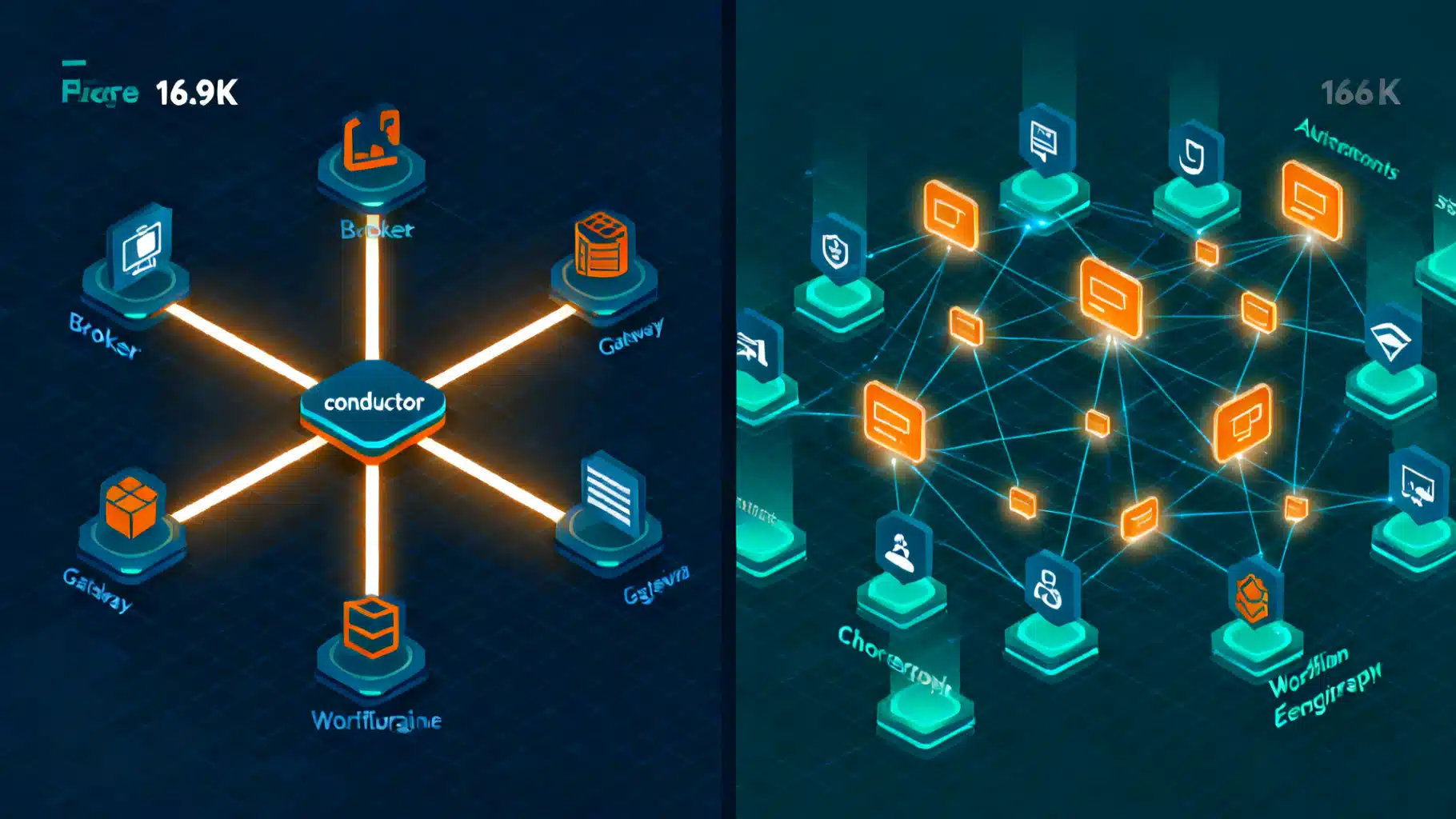
Image used for representation purposes only.
Overview
API integration in modern systems tends to converge on two dominant coordination styles: orchestration and choreography. Both move data and trigger work across services, but they differ in how control flows, how coupling emerges, and how change ripples. Getting this choice right affects reliability, velocity, and cost across the lifetime of your platform.
This article clarifies the concepts, contrasts trade-offs, shows concrete design techniques, and offers a practical decision checklist to help you choose, combine, and evolve orchestration and choreography in real systems.
Quick definitions
- Orchestration: A centralized controller (workflow engine, process manager, or custom service) directs participating services, calling each in turn and handling retries, timeouts, and compensations.
- Choreography: Services coordinate indirectly by publishing and subscribing to events. No single service “knows the whole dance”; each reacts to events and emits new ones.
Mental model
- Orchestration is a conductor leading sections of an orchestra to play a symphony in sequence.
- Choreography is a jazz jam: each musician listens and responds to the groove, following agreed patterns.
Reference use case: e‑commerce order
We’ll use an order workflow to illustrate both styles: validate cart → reserve inventory → collect payment → create shipment → notify customer.
Orchestration pattern
A dedicated workflow service calls each step and owns the overall lifecycle.
+---------------------------+
| Orchestrator (Workflow)   |
| 1. validateOrder()        |
| 2. reserveInventory()     |
| 3. chargePayment()        |
| 4. createShipment()       |
| 5. sendNotification()     |
+----+-----------+----------+
     |           |
   HTTP/gRPC   Tasks/Activities
     v           v
[Order]  [Inventory]  [Payments]  [Shipping]  [Comms]
Key traits
- Centralized control flow and error handling
- Strong visibility into progress (states, timers)
- Easier to enforce SLAs and compensations
Example (pseudo-Temporal/Step Functions style):
OrderWorkflow:
  Start: Validate
  States:
    Validate:
      Type: Task
      Resource: validateOrder
      Next: Reserve
    Reserve:
      Type: Task
      Resource: reserveInventory
      Catch: [{ ErrorEquals: [OutOfStock], Next: Cancel }]
      Next: Pay
    Pay:
      Type: Task
      Resource: chargePayment
      Catch: [{ ErrorEquals: [PaymentDeclined], Next: CompensateInventory }]
      Next: Ship
    Ship:
      Type: Task
      Resource: createShipment
      Next: Notify
    Notify:
      Type: Task
      Resource: sendNotification
      End: true
    CompensateInventory:
      Type: Task
      Resource: releaseInventory
      Next: Cancel
    Cancel:
      Type: Succeed
When to favor orchestration
- Business processes with well-defined sequences and deadlines
- Complex compensations and human-in-the-loop steps
- Compliance/audit demands for end-to-end traceability
- Teams prefer a single place to evolve process logic
Choreography pattern
Each service listens to domain events and emits new ones when its local work completes.
          (Event Broker)
           +---------+
  +------->|  topic  |<------+
  |        +----+----+       |
  |             ^            |
  |             |            |
+---+     +-----+-----+  +---+---+  +---------+
|Order|-->|Inventory |--> |Payment|->|Shipping |
+---+-+   +----+-----+    +---+---+  +----+----+
    |           |             |          |
    v           v             v          v
 OrderPlaced  InventoryReserved  PaymentCaptured  ShipmentCreated
Event examples (AsyncAPI-style snippets):
channels:
  order/placed:
    publish:
      message:
        name: OrderPlaced
        payload:
          orderId: string
          items: Item[]
          total: number
  inventory/reserved:
    publish:
      message:
        name: InventoryReserved
        payload:
          orderId: string
          reservationId: string
  payment/captured:
    publish:
      message:
        name: PaymentCaptured
        payload:
          orderId: string
          amount: number
Key traits
- Decentralized coordination, high autonomy
- Naturally extensible (new subscribers without changing publishers)
- Suits high-throughput, loosely coupled domains
When to favor choreography
- Event-driven domains with independent lifecycles
- Broad fan-out and near-real-time reactions
- Teams optimize for local change and parallel delivery
Side-by-side trade-offs
- Coupling
- Orchestration: process logic coupled to orchestrator; services simpler.
- Choreography: services couple to event contracts; process emerges from interactions.
- Observability
- Orchestration: native progress tracking and retries.
- Choreography: requires end-to-end tracing, correlation IDs, and event catalogs.
- Failure handling
- Orchestration: explicit try/catch, compensation steps, timers.
- Choreography: Sagas via event chains; compensations distributed.
- Evolution
- Orchestration: add steps centrally; potential bottleneck.
- Choreography: add consumers freely; risk of “event spaghetti.”
- Performance
- Orchestration: often lower tail latency for short, sequential flows.
- Choreography: higher throughput; eventual consistency; variable end-to-end latency.
- Team topology
- Orchestration fits strong platform/operations teams.
- Choreography fits product-aligned, autonomous teams.
Design considerations (both styles)
- Idempotency: require idempotent handlers and activities. Use idempotency keys and deduplication windows.
- Timeouts and retries: exponential backoff, jitter, circuit breakers.
- Correlation: propagate a correlation/trace ID across calls and events.
- Contracts: version topics and APIs; keep backward-compatible schemas.
- Data ownership: avoid dual writes; embrace “publish facts, not commands” in choreography.
- Storage: outbox/inbox patterns to avoid lost or phantom events.
Consistency and the Saga pattern
Distributed transactions don’t scale across services. Use sagas with compensating actions.
- Orchestrated saga: the orchestrator invokes compensations when a step fails.
- Choreographed saga: each service listens for failure events and triggers its own compensation.
Compensation examples
- ReserveInventory → releaseInventory
- ChargePayment → refundPayment
- CreateShipment → cancelShipment
Security and governance
- Authentication and authorization: OAuth2/OIDC for APIs; mTLS and signed JWTs for service-to-service; apply zero-trust principles.
- Least privilege: topic- and method-level permissions; scoped tokens.
- Data protection: classify events; avoid PII in verbose streams; encrypt at rest and in transit.
- Governance: OpenAPI/AsyncAPI registries; schema linting; breaking-change checks in CI; service catalogs with ownership metadata.
Observability, testing, and reliability
- Tracing: instrument with OpenTelemetry; capture spans for API calls and event handling; include correlation IDs and message offsets.
- Metrics: queue depths, consumer lag, DLQ counts, activity durations, retry rates, compensation frequency.
- Logging: structured logs with requestId, orderId, sagaId.
- Testing
- Contract testing (consumer-driven for events; provider for APIs)
- Deterministic workflow tests for orchestrators
- Chaos and failure injection: drop, duplicate, and delay events; simulate partial outages
Tooling landscape (illustrative)
- Orchestration engines: Temporal, Camunda, Zeebe, Netflix Conductor, AWS Step Functions, Azure Durable Functions, Google Workflows.
- Event brokers/meshes: Apache Kafka, RabbitMQ, NATS, Pulsar, SNS/SQS, Google Pub/Sub; event mesh with cloud and on-prem bridges.
- API gateways and service meshes: Envoy, Istio, Kong, Apigee; rate limits, retries, auth, and observability.
- Contract registries: OpenAPI/AsyncAPI registries; schema registry for Avro/JSON/Protobuf.
Performance and cost
- Orchestration
- Pros: bounded retries, fewer hops, compact tracing; often predictable p95 latency.
- Cons: orchestrator capacity can bottleneck; state storage and timers cost; vertical scaling pressure.
- Choreography
- Pros: horizontal scale via brokers and partitions; natural backpressure with consumer groups.
- Cons: end-to-end latency varies; duplicate processing risk; storage and egress costs for high-volume streams.
Migration and coexistence strategies
- Start orchestrated, emit events: run a central workflow but publish “fact” events at each milestone so other teams can subscribe.
- Start choreographed, add a thin orchestrator: keep events for extensibility, but introduce a workflow for critical paths (payments, SLAs).
- Strangler approach: wrap a legacy monolith behind an orchestrated facade; emit events to feed new services; gradually peel off steps.
- Backend for Frontend (BFF): compose for a single UI via lightweight orchestration even if the core remains event-driven.
Common anti-patterns to avoid
- God-orchestrator: one workflow that knows everything about every domain → split by bounded contexts.
- Event spaghetti: uncontrolled topic explosion and ad-hoc payloads → adopt naming conventions, schemas, and ownership.
- Dual writes: updating DB and publishing an event in separate transactions → use outbox pattern with transactional write + async relay.
- Chatty choreography: using events for tight request/response interactions → use direct APIs or request/reply over messaging.
- Hidden commands: naming an event like “DoPayment” → prefer “PaymentRequested” as a fact; commands should use request APIs.
Example: choosing for the order flow
- Stable, regulated payment flow with strict SLAs and refunds → orchestrate the core steps.
- Downstream analytics, recommendations, and customer notifications → choreograph via events.
- Result: hybrid architecture. The orchestrator emits domain events, and event-driven services extend behavior without changing the core.
Minimal orchestrator step in code (illustrative)
# Pseudocode using a workflow SDK concept
@workflow.defn
class OrderWorkflow:
    @workflow.run
    async def run(self, order_id):
        try:
            await activities.validate_order(order_id)
            await activities.reserve_inventory(order_id)
            await activities.charge_payment(order_id)
            await activities.create_shipment(order_id)
            await activities.send_notification(order_id)
            await activities.emit_event('OrderCompleted', order_id)
        except PaymentDeclined:
            await activities.release_inventory(order_id)
            await activities.emit_event('OrderFailed', order_id, reason='payment')
            raise
Minimal event contract with idempotency
{
  "eventType": "InventoryReserved",
  "eventId": "c6d3e18e-8f7a-45d7-9b2a-9e70b7f8e9b2",
  "occurredAt": "2026-09-29T15:03:22Z",
  "correlationId": "order-9f12c5",
  "key": "order-9f12c5",
  "payload": {
    "orderId": "9f12c5",
    "reservationId": "r-4081",
    "items": [{ "sku": "SKU-1", "qty": 2 }]
  }
}
Decision checklist
- Is the process sequence well-defined and audited? Prefer orchestration.
- Do many independent consumers need the same signal? Prefer choreography.
- Do you need human tasks, timers, and compensations? Orchestration excels.
- Do you anticipate frequent fan-out and new subscribers? Choreography excels.
- Can your teams support a workflow engine? If not, events may be simpler initially.
- How will you ensure idempotency, correlation, and schema evolution? Decide before you scale.
- What are your p95/p99 latency targets and throughput needs? Match style to SLOs.
Conclusion
There is no universal winner between API orchestration and choreography. Treat them as complementary tools. Orchestrate mission-critical, tightly sequenced flows where control, deadlines, and compensations matter. Choreograph for autonomy, extensibility, and high-throughput domains. Design with strong contracts, idempotency, and observability from day one—and don’t hesitate to adopt a hybrid that emits clean events from orchestrated cores.
Related Posts

API Dependency Management in Microservices: Contracts, Resilience, and Governance
A practical guide to API dependency management in microservices: contracts, versioning, resilience, testing, observability, and governance.
API Microservices Communication Patterns: A Practical Guide for Scale and Resilience
A practical guide to synchronous and asynchronous microservice communication patterns, trade-offs, and implementation tips for resilient APIs.
Event Sourcing for API Microservices: A Practical Guide
A practical, end-to-end guide to using event sourcing in API-based microservices, with design tips, code snippets, and operational best practices.