
Designing for Delight: A Practical Guide to API Consumer DX Improvement
A practical, metrics-driven playbook to improve API consumer developer experience—from onboarding and docs to reliability, tooling, and governance.

Image used for representation purposes only.
Overview
API consumer experience is the end-to-end journey a developer takes from discovering your API to building, shipping, and operating software with it. Improving this developer experience (DX) measurably increases adoption, reduces support load, and accelerates integration cycles. This article offers a practical, metrics-driven playbook to level up your API’s DX—covering design, documentation, onboarding, tooling, reliability, security, and change management.
Why DX Matters for APIs
- Faster time-to-value: Shorter time-to-first-success means quicker activation and stickier adoption.
- Lower total cost: Clear contracts and tooling shrink integration time and support tickets.
- Competitive moat: In crowded markets, superior DX (not features) wins.
- Operational leverage: Consistency across APIs streamlines governance and internal enablement.
Map the Developer Journey
Identify core personas and paths:
- Evaluator: Skims docs, checks examples, tests a single call.
- Integrator: Builds the first workflow; needs stability and clarity.
- Operator: Runs in production; needs observability, limits, and SLAs.
Key friction points to remove:
- Account creation and key issuance
- Auth setup (OAuth2, scopes)
- First request that returns HTTP 200
- Handling errors and retries
- Migrating through breaking changes
Measure What Matters (DX KPIs)
Track a balanced scorecard:
- Time to First 200 (TTF200): Median minutes from signup to the first successful API call.
- Activation Rate: % of signups reaching TTF200 within 24 hours.
- Docs Task Success Rate: % completing a defined quickstart unaided.
- SDK Adoption: % of requests using official SDKs.
- P95/P99 Latency and Availability SLOs.
- 4xx/5xx Error Rates and Top 5 error codes.
- Net Developer Score (NDS) or Dev NPS via post-integration survey.
Set quarterly targets and publish a DX scorecard internally to drive accountability.
Onboarding in Under 15 Minutes
Design a path that takes a developer from 0 to success quickly:
- Self-serve signup (no sales gate) and instant keys.
- Clear quickstart for each language/runtime.
- Copy-paste cURL and a minimal runnable sample app.
- One-click Postman collection and environment.
- API Explorer connected to a mock or sandbox.
Example quickstart cURL:
# 1) Set your API key
export API_KEY="sk_live_..."

# 2) Make your first call
curl -sS https://api.example.com/v1/customers \
  -H "Authorization: Bearer $API_KEY" \
  -H "Idempotency-Key: $(uuidgen)" \
  -d name="Ada Lovelace"
Documentation That Compels Action
Great docs are task-oriented, consistent, and runnable:
- Start with a 5-minute quickstart, then deep dives.
- Provide end-to-end examples and sequence diagrams.
- Show request/response examples for common and edge cases.
- Include language tabs (curl, JS/TS, Python, Java, Go).
- Link to SDK references generated from source.
- Offer OpenAPI/AsyncAPI, Postman collections, and downloadable mocks.
Structure:
- Overview and Concepts
- Getting Started (Auth, Environments, Sandbox)
- Guides (use cases)
- API Reference (generated, searchable)
- Errors & Troubleshooting
- Changelog & Deprecations
Design for Predictability
Consistency is kindness. Establish an API style guide (enforced in CI):
- Resource modeling and plural nouns (e.g., /v1/customers)
- Snake_case or camelCase, not both
- Standardized pagination (cursor-based recommended)
- Idempotency for writes (Idempotency-Key header)
- Standard HTTP semantics and status codes
- Explicit time formats (ISO 8601 UTC)
- Stable field ordering and optional fields with defaults
Minimal style guide snippet:
- HTTP 2xx for success; 4xx client errors; 5xx server errors
- 400 validation_error, 401 unauthorized, 403 forbidden, 404 not_found, 409 conflict, 422 unprocessable_entity, 429 rate_limited
- Errors must include code, message, correlation_id, and docs_url
Error Design That Teaches
Return actionable, human-first errors with machine-readable codes:
{
  "error": {
    "code": "validation_error",
    "message": "Field 'email' must be a valid address.",
    "details": [{"field": "email", "issue": "invalid_format"}],
    "correlation_id": "7b4e1f7c-4e7a-4f3d-93a1-2a7e9d7a6e88",
    "docs_url": "https://docs.example.com/errors#validation_error",
    "remediation": "Provide a RFC 5322-compliant email address."
  }
}
Include headers:
- X-Request-Id or Correlation-Id for support
- Retry-After for 429/503
Rate Limits and Quotas
Communicate limits clearly and early. Return standard headers:
HTTP/1.1 429 Too Many Requests
RateLimit-Limit: 1000
RateLimit-Remaining: 0
RateLimit-Reset: 1730001234
Retry-After: 45
Offer rate-limit tiers, burst buckets, and client-side guidance (exponential backoff with jitter). Document idempotency behavior for safe retries.
Versioning and Change Management
Prefer additive changes within a major version and plan deprecations deliberately.
- Semantic Versioning for SDKs: MAJOR.MINOR.PATCH
- URI versioning or header-based versioning for HTTP APIs (e.g., /v1)
- Changelog entries for every breaking and behavior change
- Deprecation policy: announce → sunset headers → disable in sandbox → disable in prod
Example deprecation timeline:
- Announcement: Jan 10, 2027
- Sunset headers active: Feb 1, 2027
- Sandbox removal: Apr 1, 2027
- Production removal: Jul 1, 2027
Provide migration guides, linters, and codemods (for SDKs) to minimize friction.
Contract-First with OpenAPI/AsyncAPI
Adopt design-first workflows:
- Author schemas (OpenAPI for REST, AsyncAPI for events)
- Lint with Spectral, validate with CI gates
- Generate docs, mocks (Prism/WireMock), and SDKs (OpenAPI Generator)
- Pact/contract tests between producers and consumers
Minimal OpenAPI excerpt:
openapi: 3.0.3
info:
  title: Example Payments API
  version: 1.0.0
paths:
  /v1/payments:
    post:
      operationId: createPayment
      requestBody:
        required: true
        content:
          application/json:
            schema:
              $ref: '#/components/schemas/PaymentCreateRequest'
      responses:
        '201':
          description: Created
          content:
            application/json:
              schema:
                $ref: '#/components/schemas/Payment'
        '422':
          $ref: '#/components/responses/UnprocessableEntity'
Choosing the Right API Modality
- REST: Broad compatibility, caching; great for resource CRUD.
- GraphQL: Client-driven queries; reduces over/under-fetching; requires schema discipline and caching strategy.
- gRPC: High-performance, strongly typed; ideal for internal microservices and mobile.
- Event-Driven (AsyncAPI): Decoupled systems; use for notifications, streaming, and audit trails.
Hybrid is common: REST for core resources, webhooks for events, gRPC for internal calls, GraphQL for composite read models.
Reliable Webhooks and Events
Design webhooks like an API you operate:
- Expose test endpoints and a replay UI
- Sign payloads (HMAC) and document verification
- Retries with exponential backoff and dead-letter handling
- Event versioning and schema evolution (additive changes preferred)
- Idempotency on event consumers (event_id + dedup window)
Security and Auth Without Pain
- OAuth2 flows: Client Credentials for machine-to-machine, Authorization Code + PKCE for user-delegated access
- Scope taxonomy: noun.verb (e.g., customers.read)
- Short-lived access tokens, long-lived refresh tokens; rotate keys regularly
- mTLS for sensitive internal APIs; IP allowlisting and JWT audience checks
- Clear examples for each flow and a test token endpoint in sandbox
SDKs and Tooling
Offer first-class SDKs for top ecosystems and keep them idiomatic:
- Generated core with hand-written convenience layers
- Semantic versioning and CHANGELOG.md
- Retries, backoff, idempotency, and pagination helpers built in
- Telemetry opt-in for debug (redact secrets)
Distribute:
- NPM, PyPI, Maven Central/Gradle, Go Modules, NuGet
- Docker images for CLI and mock server
Observability for Consumers
Give operators the same visibility you have:
- Request logs with correlation IDs in the portal
- Usage analytics by endpoint, key, and workspace
- Status page with historical uptime and incident postmortems
- Webhook delivery logs and replay controls
Developer Portal Essentials
Your portal is the storefront:
- SSO and RBAC for teams
- API key management, environments, and audit logs
- Docs + API explorer + console in one place
- Sandbox with seed data
- Changelog, roadmap, and feedback widgets
Pricing, SLAs, and Fair Limits
- Transparent pricing and overage behavior
- Free tier sized for meaningful evaluation
- Published SLOs (e.g., 99.9% monthly) and credits for breaches
- Hard vs soft limits explained; upgrade path is clear and self-serve
Support and Community
- Multiple support channels: forum, email, chat, and office hours
- Tiered SLAs (e.g., P1 < 1 hour, P2 < 4 hours)
- Triage with correlation IDs and minimal reproducible examples
- Public roadmap and RFCs for significant changes
A 90-Day DX Improvement Plan
- Days 1–15: Audit docs, measure TTF200, catalog top 10 support issues, define style guide, instrument correlation IDs.
- Days 16–45: Implement quickstarts, Postman collection, mock server; add error schema; publish rate-limit headers; introduce Spectral lints in CI.
- Days 46–75: Ship official SDKs for 2 languages; add portal usage analytics and status page; release migration guide template.
- Days 76–90: Set SLOs; publish DX scorecard; start deprecation policy; run usability testing; roadmap next quarter’s improvements.
Anti-Patterns to Avoid
- Silent breaking changes or undocumented behavior shifts
- “Hello World” that can’t be run in a copy-paste session
- Nonstandard status codes and ambiguous errors
- Vague rate limits and surprise throttling
- Monolithic docs without task-focused guides
- Forcing sales contact before keys
DX Scorecard Template
- TTF200 (median): < 10 minutes target
- Activation Rate (24h): > 70%
- P95 Latency (read): < 200 ms; (write): < 400 ms
- Error Rate (4xx/5xx): < 1% of requests
- Docs Task Success: > 85%
- SDK Coverage: 80% of requests via SDKs
- Availability SLO: 99.9% monthly
Closing Thoughts
Treat your API as a product with its own roadmap, SLOs, and success metrics. Center the developer’s journey, enforce consistency with contracts and automation, and remove friction ruthlessly—especially in the first 15 minutes. When DX improves, everything downstream gets easier: adoption, reliability, and revenue.
Related Posts

Designing Exceptional API Developer Portal Documentation UX: A Practical Guide
A practical guide to designing API developer portal documentation UX that reduces time to first 200 OK and scales through strong IA, tooling, and governance.
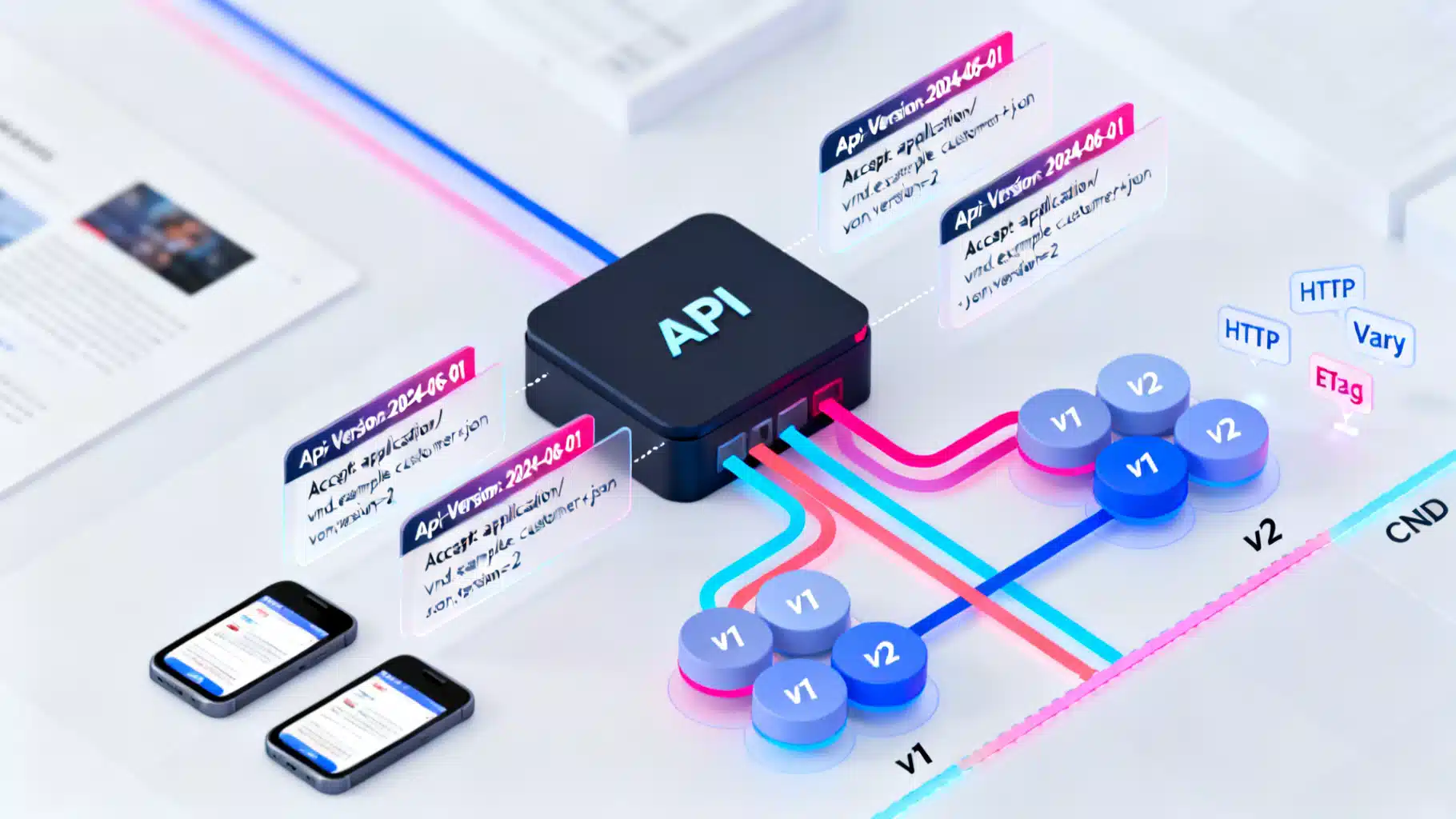
Header-Based API Versioning: A Practical Guide
A practical guide to header-based API versioning: patterns, negotiation, caching, examples, and rollout strategies for evolving contracts without breaking clients.
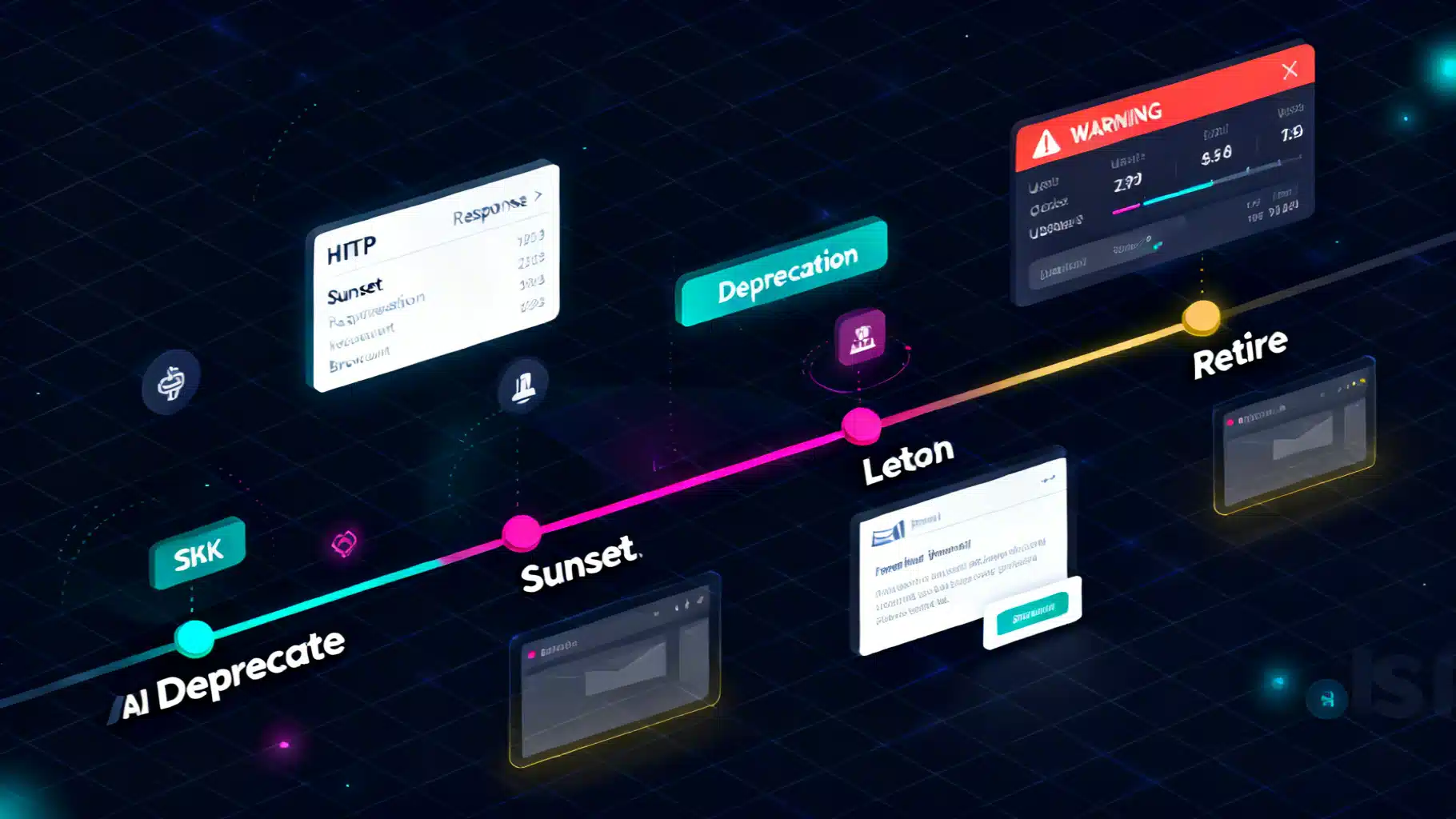
The Complete Guide to API Endpoint Deprecation Communication
A practical, end-to-end playbook for API endpoint deprecation communication: timelines, headers, templates, and runbooks that prevent breaking changes.