
The Price of “Free” in 2026: Big Platforms Redraw the Lines
YouTube’s ad-block crackdown, Prime Video’s pricier ad‑free tier, and ads in ChatGPT: 2026 is redefining what “free” online really means.
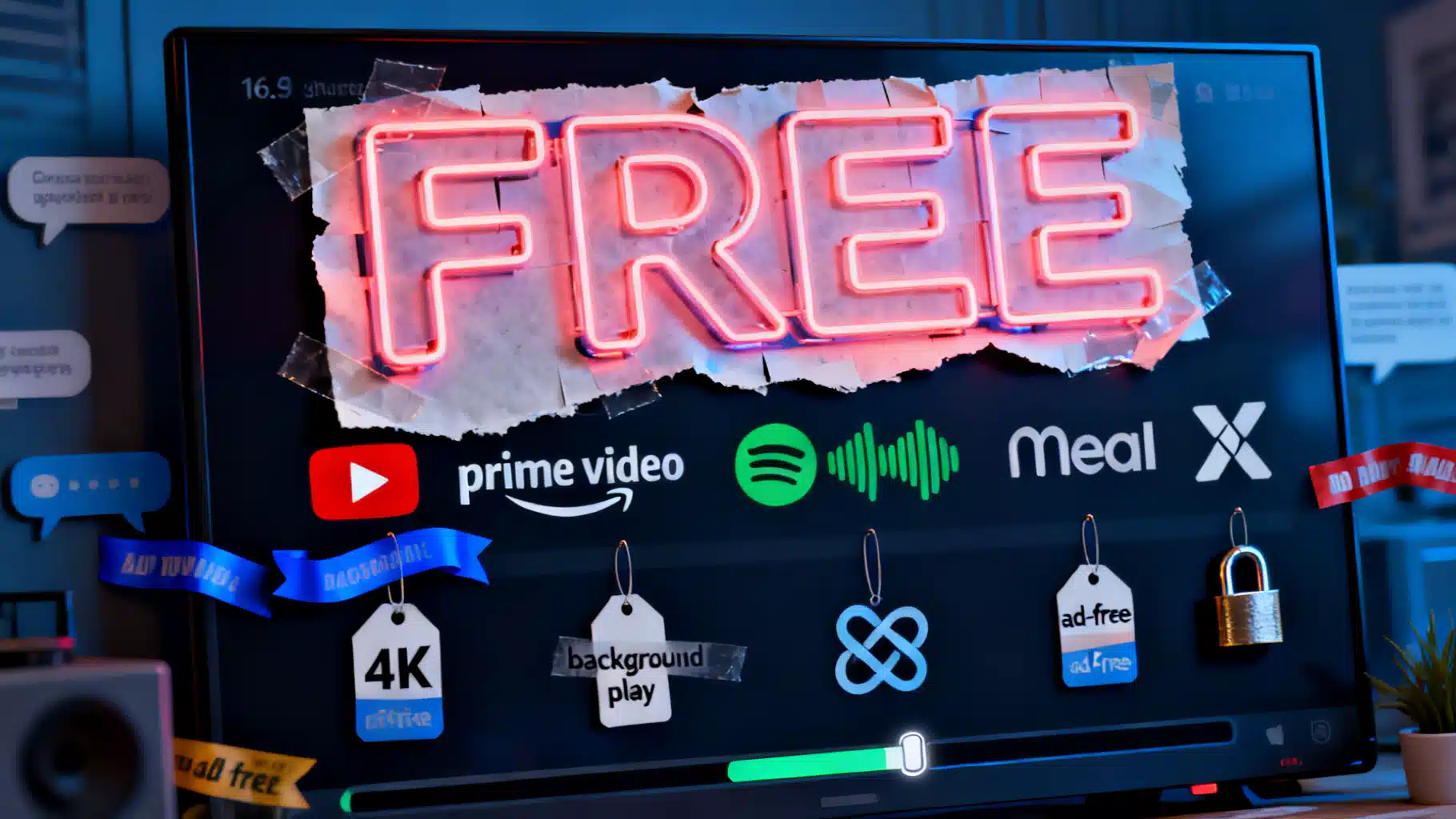
Image used for representation purposes only.
The price of “free” in 2026: the internet’s great unbundling
For a generation, “free” has been the default promise of the consumer web. But in early 2026, that promise is being redefined. Major platforms are tightening the screws on ad-avoidance, carving out premium tiers, and experimenting with new revenue from users who once paid only with their attention and data. YouTube is escalating its anti–ad blocker campaign, Amazon has raised the cost to remove ads on Prime Video again, Spotify hiked subscription prices while lightly upgrading its free tier, OpenAI is testing ads in ChatGPT even as it rolls a newer default model to the free tier, Meta is shifting away from strict “pay or okay” in Europe, and X has moved toward fees for new accounts. Taken together, “free” is becoming a trial, a funnel, or an upsell. (macrumors.com )
What changed lately (Jan–May 2026)
- January 2026: Spotify raises U.S. Premium prices across plans; the Individual plan moves to $12.99/month. (macrumors.com )
- January–February 2026: YouTube intensifies ad-blocker enforcement, including playback errors and UI restrictions for users with blockers. (windowscentral.com )
- February 9, 2026: OpenAI begins testing ads in ChatGPT for Free and Go users. (searchenginejournal.com )
- March 14, 2026: Amazon rebrands and raises Prime Video’s ad‑free add‑on in the U.S. to $4.99/month, with more premium features gated there. (Effective April 10, 2026.) (techradar.com )
- May 6, 2026: OpenAI makes “GPT‑5.5 Instant” the default model for all ChatGPT users, including the free tier. (ndtv.com )
Why “free” is changing
- Ad markets recovered unevenly from the 2022–2023 slump, pushing platforms to protect ad inventory (by cracking down on blockers) and to convert some “free” usage into paid tiers. YouTube’s efforts range from slowing video loads for ad‑block users to hiding comments/descriptions and blocking background play workarounds—nudging users toward Premium. (macrumors.com )
- Streaming economics no longer support ad‑free by default. Amazon’s second price rise for its ad‑free Prime Video tier in roughly a year, plus gating of 4K/Dolby features, underlines a broader pivot: keep the base service “included,” but upsell essentials once seen as table stakes. Amazon also touts fast‑growing ad revenue, with estimates placing 2025 advertising services north of $68 billion. (pcworld.com )
- Freemium AI is converging on an ad‑supported model. OpenAI’s ad tests signal that the cost of inference at consumer scale likely requires either subscriptions, caps, or ads—sometimes all three—despite periodic upgrades to what the free tier can do. (searchenginejournal.com )
- Regulation is reshaping “free with tracking” in Europe. Meta’s path away from a binary “consent or pay” model toward a reduced‑data option in 2026 reflects mounting legal pressure after the European Data Protection Board’s April 17, 2024 opinion and subsequent court actions in 2025. (techradar.com )
Platform-by-platform: how “free” now works
YouTube: from warnings to roadblocks
After years of tolerating ad avoidance, YouTube has shifted to friction and functionality limits for users with ad blockers. Reports since mid‑2025 documented deliberate video slowdowns; by early 2026, some users saw playback failures or hidden UI elements (descriptions, comments) and “background play” workarounds were blocked on mobile. The strategy is simple: make the “free with blockers” route worse than paid Premium—or at least worse than watching ads. (macrumors.com )
YouTube’s stance likely connects to protecting ad yields at scale. Industry analysis this February framed the crackdown as a revenue safeguard amid high user intent to install blockers on mobile. Expect periodic enforcement waves and counter‑moves from filter‑list maintainers to continue. (emarketer.com )
Streaming: Prime Video’s ad‑free becomes an upsell
Amazon introduced ads to Prime Video in the U.S. in 2024 and has since ratcheted up differentiation: on March 14, 2026 it unveiled “Prime Video Ultra,” raising the ad‑free add‑on to $4.99/month effective April 10, 2026, while tying key features (4K/UHD, Dolby Atmos, more concurrent streams and downloads) to the paid tier. The move mirrors cable’s old “good/better/best” packaging—except the base tier is still called “Prime.” (techradar.com )
The ad strategy is working at the corporate level. External tallies peg Amazon’s 2025 advertising services revenue at roughly $68–69 billion, validating the shift toward ads as a core pillar—one that streaming can feed. (marketingdive.com )
Music: Spotify charges more, but sweetens “free” just enough
On January 15, 2026, Spotify confirmed another U.S. price increase, taking the Individual plan to $12.99/month and bumping other tiers as well. Yet Spotify also loosened some shackles on its ad‑supported tier in late 2025, allowing more on‑demand selection via “Share & Play” and reducing shuffle restrictions—small quality‑of‑life wins that preserve a credible free funnel. (macrumors.com )
The pattern is familiar: paid gets costlier and more capable; “free” gets just enough utility to keep the top of the funnel wide.
AI assistants: free is expanding—and getting ads
OpenAI’s consumer strategy now openly mixes access upgrades and advertising. On February 9, 2026 the company began testing ads in ChatGPT for Free and Go users. Then on May 6, 2026, OpenAI rolled out “GPT‑5.5 Instant” as the new default model for all ChatGPT users, including those on the free tier—enhancing what “free” can do while monetizing attention. (searchenginejournal.com )
Social media: “free speech” meets small fees
X’s bot‑fighting plan includes charging a “small fee” before new users can post, like, or reply—an approach Elon Musk floated and confirmed in April 2024, with a three‑month waiting period for those who don’t pay. Even where reading remains free, the ability to speak—long synonymous with social media “free”—is increasingly gated. (arstechnica.com )
Privacy and regulation: Europe’s pushback on “consent or pay”
The European Data Protection Board’s non‑binding opinion on April 17, 2024 argued that most “pay or okay” models do not meet GDPR’s standard for valid consent. In 2025, the EU General Court dismissed Meta’s bid to overturn that opinion. Against this backdrop, Meta said it would offer a reduced‑data, less‑personalized ads option across Facebook and Instagram in Europe starting in 2026—an attempt to preserve a free tier without forcing tracking or payment. (cdt.org )
The new meaning of “free”
- Free as funnel: Expect more platforms to keep a no‑cash option that’s intentionally limited, inconvenient with blockers, or missing formerly standard features.
- Free as trial: Short‑term or capability‑capped access (lower‑quality video, model limits in AI) will hand the best experience to paid tiers.
- Free as regulated choice (EU): A third path is emerging—reduced‑data ads that respect consent while keeping services usable at zero price.
What to watch next
- AI monetization mechanics: If OpenAI’s ad tests drive meaningful revenue without trashing UX, ads could become standard across free AI chat, vision, and agent features—just as they did for video and music. (searchenginejournal.com )
- Streaming feature drift: More “premium” essentials (4K, spatial audio, concurrent streams) could consolidate into higher‑priced add‑ons across services following Amazon’s lead. (techradar.com )
- YouTube enforcement cycles: Expect periodic clampdowns and technical counter‑moves as Google defends ad inventory; the risk is user fatigue that spills into creator economics. (macrumors.com )
- EU privacy rulings: National regulators will translate the EDPB’s stance into concrete enforcement, determining how much of “free with ads” can survive without coercive consent. (cdt.org )
Bottom line
“Free” isn’t disappearing in 2026—but it is being redesigned. Across video, music, social, and AI, the baseline experience still exists at no cash cost. What’s changing is everything around it: more friction if you avoid ads, more features held back for paying users, and—in Europe—more legal scrutiny of “free” that demands your data. The age of effortless, everything‑is‑free internet is over; in its place is a menu of trade‑offs where your time, privacy, quality, or wallet pays the difference. (pcworld.com )
Related Posts
Amazon sued over ‘bricked’ Fire TV Sticks: What the April 2026 class action means for consumers
New class action alleges Amazon ‘bricked’ older Fire TV Sticks by ending software support. What the April 2026 case claims and what owners should know.

The Roku Channel in 2026: FAST leader adds channels, expands on Fire TV, and doubles down on originals
The Roku Channel’s 2026 surge: new free channels, Fire TV integration, and Originals fuel a FAST leader’s momentum.

Ethical Use of AI Medical Diagnosis APIs: A Practical Blueprint
A practical guide to ethical AI medical diagnosis APIs: privacy, consent, validation, fairness, security, oversight, and monitoring for trustworthy use.