Google’s Gemini 4 Neon arrives: frontier-level intelligence at mid-tier prices
Google debuts Gemini 4 Neon with frontier-level reasoning, 1M-token context, and aggressive pricing—live now across the Gemini app, API, and Antigravity.

Image used for representation purposes only.
Google launches Gemini 4 Neon: a faster, cheaper “frontier-level” model for real work
Google unveiled Gemini 4 Neon on November 18, 2026, positioning it as a model that delivers frontier-level reasoning with faster end-to-end task completion across complex software engineering, knowledge work, and scientific analysis. The rollout began across the Gemini app, the paid Gemini API in Google AI Studio, and Google’s agentic development environment, Antigravity. (blog.google )
Where Neon fits in the Gemini 4 lineup
Google now frames Gemini 4 as a three-model family: Hydrogen for high-speed everyday help, Neon for deeper analysis and complex workflows, and Carbon for the hardest long-horizon projects. In the consumer Gemini app, access varies by plan: Pro subscribers can select Neon for both Chats and Tasks, while Ultra unlocks Neon and Carbon. (support.google.com )
Pricing, context length, and I/O limits
At launch, Neon’s API pricing is $3 per million input tokens (with cached input at $0.15) and $15 per million output tokens. The model supports a unified 1 million-token context window and up to 64K synchronous output tokens (with long background decode up to 1M). Distribution includes the Gemini app, Gemini API (AI Studio), Gemini for business, and Antigravity. (venturebeat.com )
Benchmarks and early positioning
Google reports that Neon ranks near the top of several capability indices and specialized evaluations. In the provider’s published evaluation, Neon scores 61 on the Artificial Analysis Intelligence Index v5.0.1 and 70.9% on the Vals Index v2.2. It leads on AutomationBench (56.3%) and achieves competitive agentic-coding results, including 65.2% on Terminal-Bench 4.1 and 46.2% on FrontierCode 2.0. On multimodal and long-context tests, it posts 73.5% on Chartography, 89.0% on LVBench, and 95.2% on GraphWalks. In cybersecurity-focused tests, it records 90.5% on SEC-bench Pro, 70.7% on CWE-Bench v2, and 51.3% on WebExploitBench v1.2. These figures are Google-reported; independent replications may differ. (storage.googleapis.com )
How Neon compares to rivals—and to Carbon
Trade press and Google’s own materials frame Neon as competitive with Anthropic’s Opus 5.5 and OpenAI’s GPT-6.2 Sol on general capability indices, while undercutting Opus 5.5 on price by roughly 25% at standard rates. Google’s charts also show areas where rivals lead—for example, Opus 5.5 edges Neon on Terminal-Bench 4.1 and FrontierCode 2.0, and Sol leads on Chartography—reflecting that “best” depends on the workload. Compared to Google’s own Carbon, Neon aims to deliver comparable quality on many practical tasks, but at lower cost and latency. (venturebeat.com )
Availability notes and early UI changes
As of November 18, Neon is selectable for paying users in the Gemini app; reporters observed it appearing under the “Deeper analysis” heading and, in some regions, replacing Argon in the model picker. For enterprises and developers, Neon is available in AI Studio and Android Studio via the paid Gemini API and appears in verified enterprise documentation. (digitaltrends.com )
What Neon is built to do
Google positions Neon for long-running, tool-heavy agent workflows and production-grade tasks where outputs must be inspected, shared, and iterated—like multi-file code refactoring, business automation in spreadsheets, or analyzing mixed media (PDFs, images, audio, video) in a single prompt. In Antigravity, Neon can act as a high-judgment orchestrator that coordinates faster Hydrogen subagents to complete complex jobs. (blog.google )
Safety, limitations, and knowledge freshness
The model card describes Neon as adapted from Gemini 4 Carbon, with safety and alignment controls comparable to Carbon and targeted improvements in refusal behavior and indirect prompt-injection resilience. The listed knowledge cutoff is March 2026, and the full Safety & Security report is slated to follow. As with any LLM, hallucinations remain a known limitation; Google highlights mitigations and continued tuning. (deepmind.google )
Why this matters
Neon extends Google’s tiered strategy: Hydrogen for volume, Neon for demanding recurring work, and Carbon for the hardest extended projects. For buyers, the practical question becomes cost-per-task and time-to-finish—not just price-per-token—which Neon aims to improve against both rivals and Google’s own Carbon on many common jobs. For developers, the 1M-token multimodal window and agent-friendly behavior may reduce orchestration overhead in real-world pipelines. (blog.google )
Getting started
- Consumers: In the Gemini app (web or mobile), Pro and Ultra subscribers can select “Gemini 4 Neon” from the model menu and adjust thinking levels per task.
- Developers: Select “gemini-4-neon” in Google AI Studio or via the Gemini API; Neon is also available inside Android Studio for AI-assisted development.
- Enterprises: Neon is exposed via Gemini for business and in Antigravity; contact your admin or Google Cloud team for enablement. (support.google.com )
The bottom line
Launched on November 18, 2026, Gemini 4 Neon brings frontier-class reasoning to a more accessible price-performance point and is already live across Google’s consumer, developer, and enterprise surfaces. Expect active benchmarking over the coming weeks as users validate Google’s claims in their own workflows. (blog.google )
Related Posts
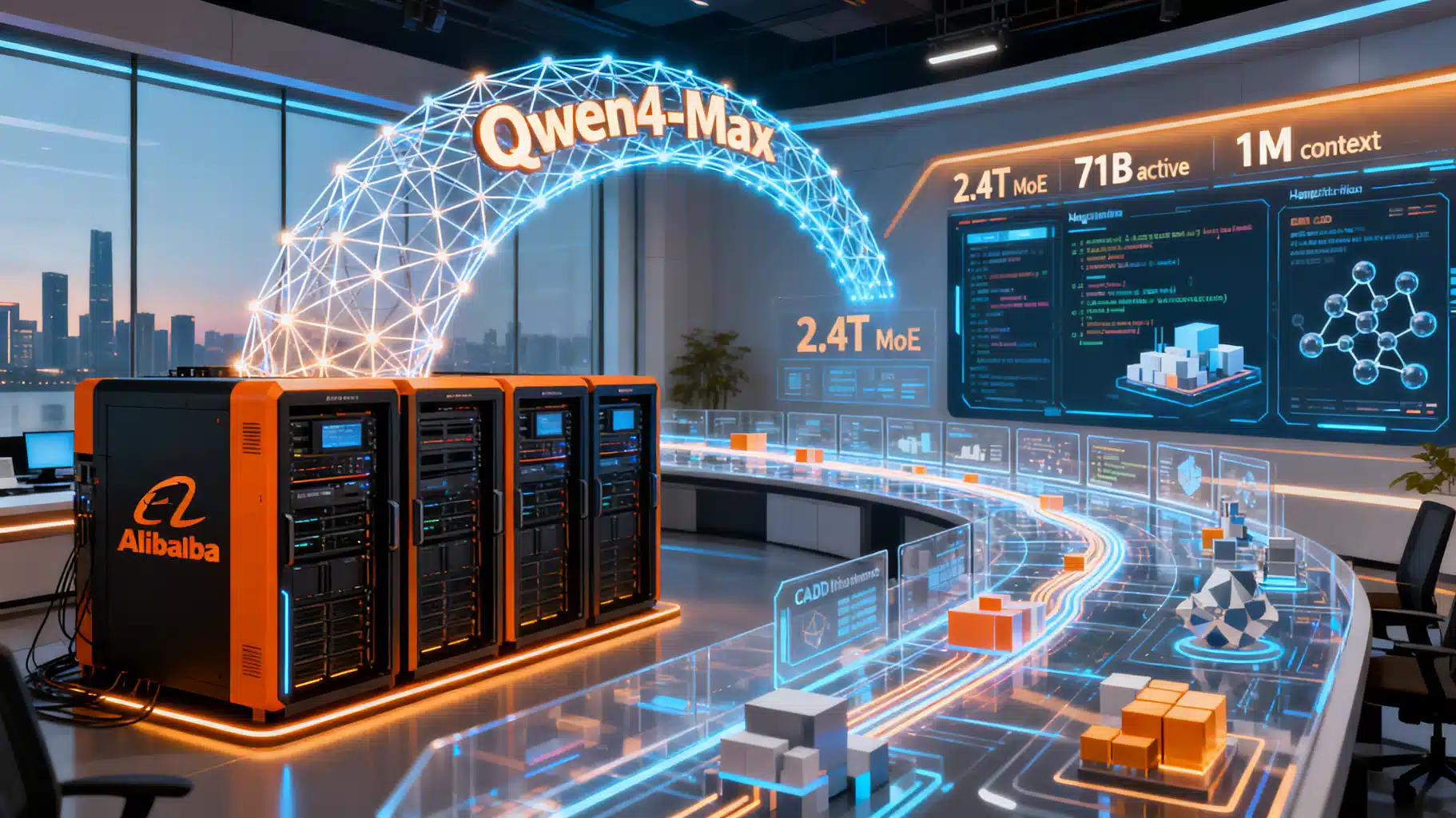
Alibaba debuts Qwen4-Max: 2.4T MoE flagship with 1M context and lower task costs
Alibaba launches Qwen4-Max: a 2.4T MoE flagship with 1M context and aggressive pricing, moving Qwen4 from preview to GA on November 16, 2026.
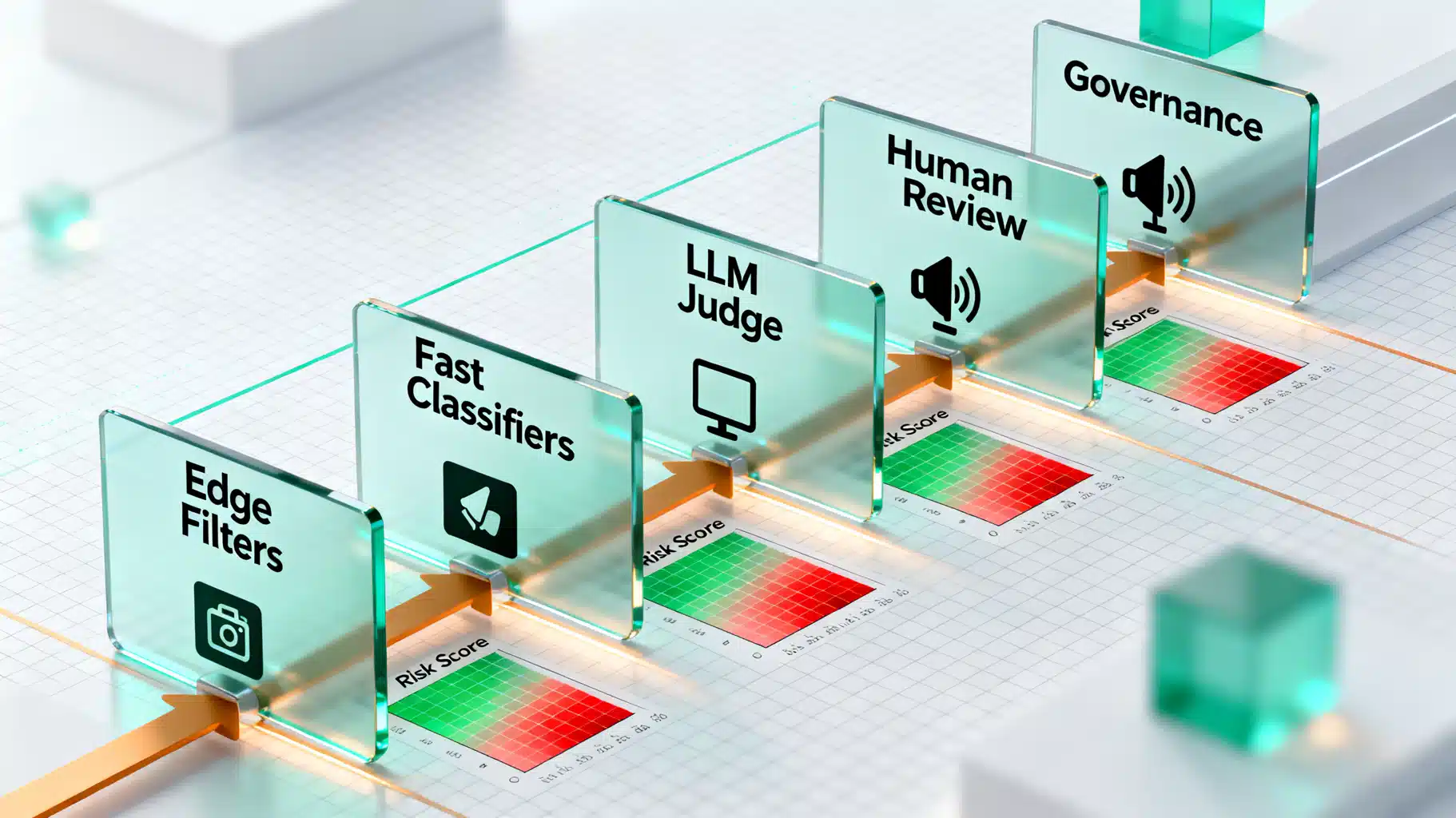
AI Content Safety Moderation Techniques: A Practical Defense-in-Depth Guide
Practical, defense-in-depth techniques for AI content safety across text, image, and audio: policies, classifiers, guardrails, pipelines, and evaluation.

Qwen 4 begins: Alibaba opens Qwen4‑Max preview with a 1M‑token context
Alibaba opens a two-week Qwen4-Max preview with a 1M-token context; multimodal inputs and default reasoning arrive, but pricing and benchmarks wait.